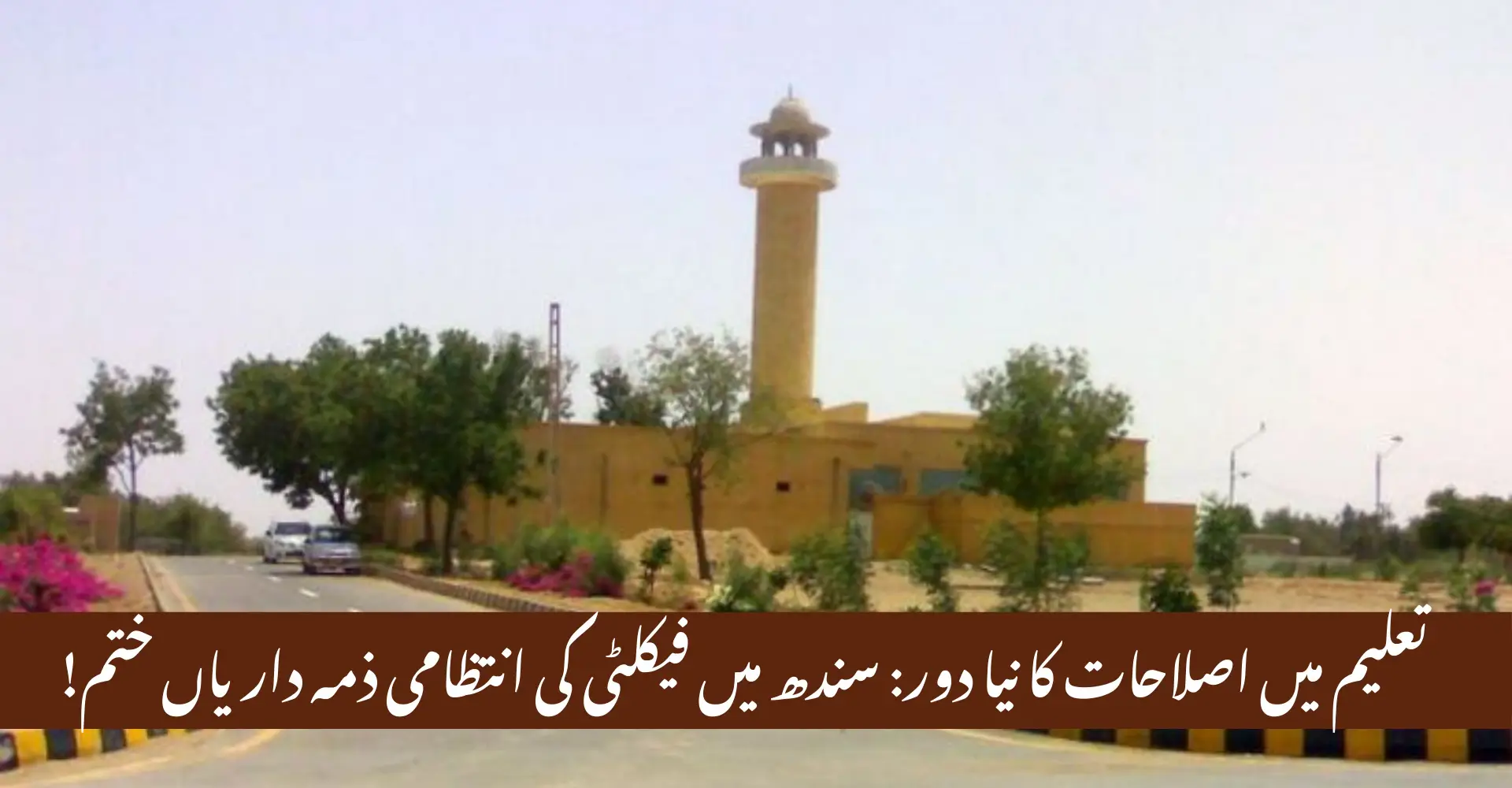
Sindh Orders Removal of Faculty From Administrative Posts Policy 2026. Sindh has officially ordered the removal of faculty members from administrative positions in public universities, enforcing long-standing court directives. This 2026 policy rewrite aims to restore governance transparency, improve academic focus, and ensure lawful appointments across higher education institutions.

Why Sindh Took This Decision
The Sindh Higher Education Commission (Sindh HEC) has issued a strict directive mandating the immediate removal of faculty members and PhD holders from non-teaching administrative roles in all public sector universities across the province.
This move is not sudden. It is based on:
- Sindh High Court orders
- Supreme Court of Pakistan directives
- Long-standing concerns about governance misuse in universities
The commission has given eight working days to all vice-chancellors to fully comply.
Key Details of the Sindh HEC Directive (2026 Update)
Universities Affected
- Around 30 public sector universities in Sindh
- Includes general, engineering, medical, and agricultural universities
Positions Declared Unlawful for Faculty
Faculty members are no longer allowed to hold the following administrative posts:
- Registrar
- Controller of Examinations
- Director Quality Enhancement Cell (QEC)
- Director ORIC
- Any budgeted or non-budgeted administrative post
This applies regardless of appointment type.

Appointment Types Banned Under the New Order
Sindh HEC has clearly prohibited faculty appointments under all temporary and informal arrangements, including:
| Appointment Type | Status |
|---|---|
| Additional Charge | Prohibited |
| OPS (Own Pay Scale) | Prohibited |
| Look-After | Prohibited |
| Acting Appointments | Prohibited |
| Contractual Arrangements | Prohibited |
No exceptions have been allowed under the revised enforcement.
Court Orders Behind the Decision
Sindh High Court – Hyderabad Circuit
The directive references a Hyderabad Circuit Court order dated December 9, 2026, issued in:
- CP No. 1757 of 2026
This ruling clearly stated that faculty members cannot legally occupy administrative posts, even on temporary arrangements.
Supreme Court of Pakistan Order
Additionally, the Sindh HEC cited a Supreme Court directive dated November 11, 2026, which ruled that:

- All vacant administrative posts must be filled strictly according to law
- Temporary or ad-hoc arrangements must be immediately discontinued
This Supreme Court ruling forms the constitutional backbone of the policy.
Why Faculty Were Previously Given Administrative Roles
Many vice-chancellors had defended the practice by arguing:
- Universities faced severe financial constraints
- Hiring separate administrators would increase expenses
- Faculty were not drawing additional salaries
However, Sindh HEC has now categorically rejected these justifications, stating that financial constraints cannot override legal and constitutional requirements.
Official Statement from Sindh HEC
In an official letter issued by Naheed J. Haider, Assistant Director Sindh HEC, the commission stated that:
- All such appointments must be terminated immediately
- Universities must submit a compliance report within eight working days
- Any violation will be the sole responsibility of the university administration
This language signals zero tolerance going forward.

Impact on Public Universities in Sindh
1. Governance Restructuring
Universities will now need to:
- Recruit qualified professional administrators
- Follow transparent hiring processes
- End informal internal arrangements
2. Academic Quality Improvement
With faculty returning to teaching and research:
- Classroom engagement is expected to improve
- Research productivity may increase
- Faculty workload imbalance will be reduced
3. Legal & Institutional Accountability
This move sets a precedent for:
- Stronger rule of law in higher education
- Reduced misuse of authority
- Increased institutional credibility
Challenges Universities May Face
Despite its benefits, implementation may face obstacles:
Short-Term Administrative Gaps
Some universities may experience temporary operational slowdowns while hiring administrators.

Resistance from Internal Stakeholders
Faculty members currently holding influential posts may resist change.
Budget Constraints
Hiring separate administrators will require financial planning and budget reallocation.
However, Sindh HEC has made it clear that compliance is non-negotiable.
Comparison: Old Practice vs New Policy
| Aspect | Old System | New 2026 Policy |
|---|---|---|
| Faculty as Administrators | Allowed | Completely Banned |
| Temporary Appointments | Common | Illegal |
| Court Compliance | Weak | Strict |
| Transparency | Limited | Mandatory |
| Academic Focus | Divided | Restored |
What Vice-Chancellors Must Do Now
Vice-chancellors have been instructed to:
- Immediately terminate all faculty administrative roles
- Initiate lawful recruitment processes
- Submit written compliance reports
- Ensure future appointments follow legal frameworks
Failure to do so may result in personal liability.

FAQs
Why did Sindh remove faculty from administrative posts?
The decision follows Supreme Court and Sindh High Court orders ensuring lawful appointments and better governance.
Which universities are affected by this order?
All public sector universities in Sindh, around 30 institutions, must comply.
Can faculty hold administrative posts temporarily?
No. Temporary, OPS, or look-after arrangements are strictly prohibited.
What is the deadline for compliance?
Universities have been given eight working days to submit compliance reports.
What happens if a university does not comply?
The respective university administration will be held fully responsible for legal consequences.
Conclusion
The decision by Sindh to remove faculty from administrative posts marks a major governance reform in higher education. By enforcing court rulings and ending informal practices, the province aims to restore academic integrity, transparency, and legal compliance across public universities.