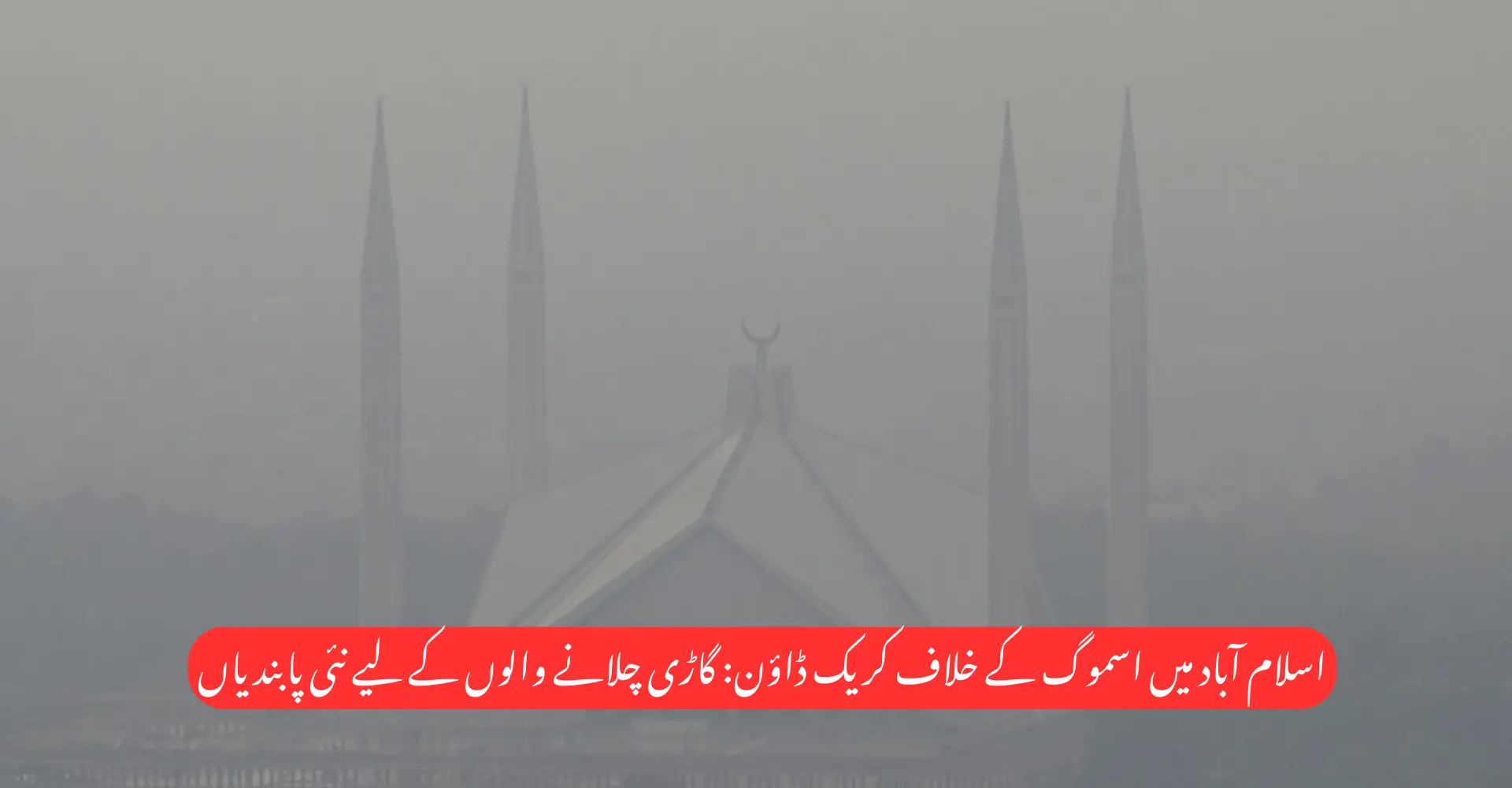
Islamabad Smog Crackdown 2026: Drivers on Notice as Air Crisis Deepens. Islamabad, once known for its clean air and green spaces, is now facing a serious smog emergency. In 2026, authorities have put drivers on strict notice as vehicle emissions become a leading cause of dangerous air pollution. With fines, checkpoints, and impoundments underway, the city is entering a new phase of environmental enforcement.

Islamabad’s Growing Smog Crisis Explained
Islamabad’s air quality has deteriorated rapidly over the last few years. What was once considered Pakistan’s cleanest major city is now frequently recording “very unhealthy” PM2.5 levels, especially during winter.
Why Smog Is Getting Worse in Islamabad
Several factors are contributing to the worsening smog situation:
- Increased number of older vehicles
- Heavy reliance on private transport
- Limited public transportation infrastructure
- Winter atmospheric inversion trapping pollutants
- Weak enforcement in previous years
Unlike industrial hubs such as Lahore or Karachi, Islamabad’s pollution problem is largely self-inflicted.
Vehicle Emissions: The Biggest Polluter in the Capital
According to the Pakistan Air Quality Initiative, nearly 53% of Islamabad’s PM2.5 pollution comes from the transport sector.
Key Emission Sources
- Diesel trucks and buses
- Old petrol cars without emission control systems
- Poor vehicle maintenance
- Adulterated fuel
“The haze over Islamabad is not factory smoke — it’s the exhaust of millions of private journeys.”


This reality has pushed authorities to act more aggressively in 2026.
Government Crackdown: Drivers Officially on Notice
In December, Islamabad’s Environmental Protection Agency (EPA) launched a citywide vehicle emissions crackdown.
What the Crackdown Includes
- Roadside emission checkpoints
- On-spot emission testing
- Fines for smoke-emitting vehicles
- Vehicle impoundment for non-compliance
- Entry bans for high-polluting trucks
Dr. Zaigham Abbas of the EPA made it clear:
“Non-compliant vehicles will not be allowed to poison Islamabad’s air.”
Real Impact on Drivers
For many drivers, the enforcement came as a shock.

Case Study: Truck Drivers Under Pressure
Truck driver Muhammad Afzal was fined 1,000 PKR after police detected thick diesel smoke from his vehicle.
- He claimed the vehicle had just been repaired
- Officers allegedly accelerated the engine to test emissions
- Failure to comply risked vehicle impoundment
This highlights the tension between environmental enforcement and economic realities for transport workers.
PM2.5 Levels: Islamabad vs Other Cities
| City | Average PM2.5 (2026) | WHO Safe Limit |
|---|---|---|
| Islamabad | 52.3 µg/m³ | 5 µg/m³ |
| Lahore | 46.2 µg/m³ | 5 µg/m³ |
| Karachi | Lower but rising | 5 µg/m³ |
Islamabad has already crossed Lahore’s annual average, a worrying sign for 2026.
Health Risks of Smog Exposure
Smog is not just an environmental issue — it’s a public health emergency.
Common Health Effects
- Eye and throat irritation
- Allergies and asthma
- Reduced lung function
- Heart disease risk
- Long-term respiratory illness
Residents like Iftikhar Sarwar, 51, report daily medication needs due to pollution-triggered allergies.
Why Winter Makes Smog Deadlier
Atmospheric Inversion Explained
During winter:
- Cold air stays near the ground
- Warm air traps pollutants above
- Exhaust gases accumulate instead of dispersing
This is why December–January remains the most dangerous period for air quality in Islamabad.
Green Stickers & Emission Testing Stations
To encourage compliance, the government has introduced vehicle emission testing stations.
How the Green Sticker System Works
- Vehicles are tested on-site
- Compliant vehicles receive a green windshield sticker
- Non-compliant vehicles must repair emissions issues
- Repeat offenders face heavier penalties
This system aims to educate, not just punish, drivers.
Is Islamabad Losing Its Original Vision?
Designed in the 1960s as a model capital city, Islamabad featured:

- Wide roads
- Green belts
- Clean air
- Low population density
But unchecked urbanization and car dependency have eroded that vision.
Anthropologist Sulaman Ijaz reflects:
“What will I say if my daughter asks for clean air? That is her basic right.”
Are Government Measures Enough in 2026?
While the crackdown is a positive step, experts believe long-term solutions are essential.
What Islamabad Still Needs
- Reliable public transport systems
- Incentives for electric vehicles
- Stricter fuel quality control
- Urban planning reforms
- Continuous air quality monitoring
Without these, enforcement alone may not solve the crisis.
Why This Issue Will Trend in 2026
Search trends show rising interest in:
- Islamabad smog news
- Vehicle emission fines Pakistan
- PM2.5 levels Islamabad today
- EPA vehicle checks
- Air pollution health effects
This makes the topic high-intent and SERP-friendly for environmental, news, and policy blogs.
FAQs
Why is Islamabad facing severe smog in 2026?
Islamabad’s smog is mainly caused by vehicle emissions, increased traffic, and winter atmospheric inversion trapping pollutants.
Are vehicle emission fines legal in Islamabad?
Yes, fines and impoundments are enforced under EPA environmental protection regulations.
What is a safe PM2.5 level according to WHO?
The World Health Organization recommends PM2.5 levels below 5 µg/m³ annually.
Can vehicles be banned from entering Islamabad?
Yes, high-emission vehicles can be stopped or denied entry into the city.
How can drivers avoid fines?
Regular vehicle maintenance, emission testing, and compliance with EPA standards can help drivers avoid penalties.
Conclusion
Islamabad’s 2026 smog crackdown marks a critical turning point. While enforcement against polluting vehicles is necessary, lasting change will require smarter urban planning, cleaner transport options, and public cooperation. Clean air is not a luxury it’s a fundamental right.