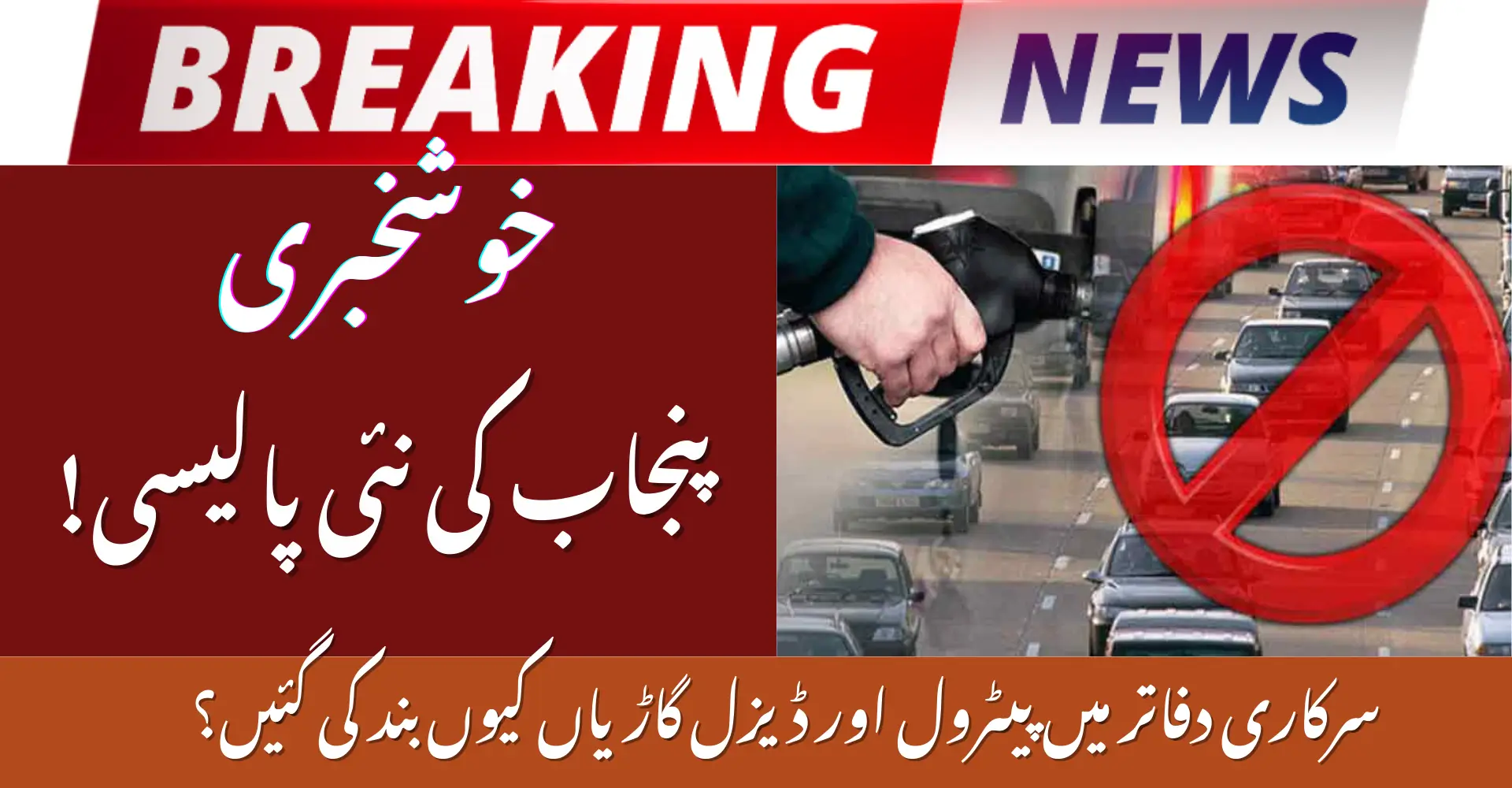
Punjab Bans Petrol And Diesel Vehicles in Govt Departments 2026. The Punjab government has taken a bold step to cut fuel costs and reduce pollution. From 2026, government departments can no longer buy petrol or diesel vehicles. Only electric and hybrid vehicles will be allowed, with limited exemptions.

This guide explains what the ban means, why it matters, and how it will change transport in Punjab.
What Is the Punjab Petrol & Diesel Vehicle Ban?
The Punjab petrol and diesel vehicle ban applies to new vehicle purchases by government departments.
It does not affect private citizens or existing government vehicles.
The decision was formally approved by Maryam Nawaz Sharif, Chief Minister of Punjab.
The policy aims to shift official transport toward cleaner and cheaper options.
Key Points at a Glance
| Policy Area | Details |
|---|---|
| Affected Buyers | Punjab government departments |
| Banned Vehicles | Petrol and diesel (new purchases only) |
| Allowed Vehicles | Electric and hybrid |
| Exemptions | Field duty vehicles |
| Policy Launch | Electric Vehicle Policy 2026 (coming soon) |
Why Punjab Is Phasing Out Petrol and Diesel Vehicles
1) Rising Fuel Costs
Fuel prices have been unstable for years.
Government fleets consume large volumes of petrol and diesel.
Electric and hybrid vehicles reduce recurring fuel expenses.
2) Environmental Pressure
Urban smog remains a serious issue in Punjab.
Transport emissions are a major contributor.
Electric vehicles produce zero tailpipe emissions.
3) Global Shift to Clean Transport
Many governments now electrify public fleets.
Punjab wants to align with global climate goals.
The 2026 policy signals long-term commitment.
Vehicles Covered Under the Ban
The ban applies to all administrative and official-use vehicles purchased by departments.
Included
- Official cars for officers
- Pool vehicles
- Staff transport vehicles
- Administrative motorcycles and cars
Not Included
- Existing petrol or diesel vehicles
- Vehicles bought before policy enforcement
- Privately owned vehicles
Exemptions: Which Vehicles Are Still Allowed?
Not all government vehicles fall under the ban.
Field Duty Vehicles (Exempt)
Vehicles used for essential field operations are exempt due to operational needs.
Examples include:
- Police patrol vehicles
- Rescue and emergency services
- Field inspection vehicles in remote areas
- Disaster response fleets
These exemptions recognize infrastructure limits in certain regions.
Electric and Hybrid Vehicles: What’s Allowed?
Electric Vehicles (EVs)
EVs run fully on electricity.
They offer the lowest running cost per kilometer.
Maintenance is simpler due to fewer moving parts.

Benefits for Government Fleets
- Zero fuel cost
- Low maintenance
- Quiet operation
- No emissions
Hybrid Vehicles
Hybrids combine fuel engines with electric motors.
They are ideal where charging stations are limited.
Why Hybrids Matter
- Better fuel efficiency
- Lower emissions than petrol cars
- No range anxiety
- Smooth transition to full EVs
Punjab Electric Vehicle Policy 2026: What to Expect
The government has confirmed that the Electric Vehicle Policy 2026 will be announced soon.
While full details are pending, experts expect the policy to include:
Expected Features
- EV procurement rules for departments
- Charging infrastructure plans
- Budget allocation for EV fleets
- Local assembly incentives
- Training for maintenance staff
This policy will serve as the legal backbone of the ban.

How This Decision Impacts Government Departments
Budget Planning
Departments must revise procurement budgets.
EVs cost more upfront but save money long term.
Fleet Management
Departments will need:
- Charging plans
- Route planning
- Vehicle usage optimization
Staff Training
Drivers and mechanics require EV training.
Safety standards will also be updated.
Financial Impact: Cost Comparison
Here is a simplified cost comparison for government use:
| Cost Type | Petrol Vehicle | Electric Vehicle |
|---|---|---|
| Fuel per km | High | Very low |
| Maintenance | High | Low |
| Oil changes | Required | Not needed |
| Long-term cost | Expensive | Cost-effective |
Over 5–7 years, EVs usually cost less overall.
Environmental Impact on Punjab Cities
Major cities like Lahore, Faisalabad, and Rawalpindi face high pollution levels.
Government fleets operate daily across these cities.

Expected Benefits
- Reduced smog
- Lower carbon emissions
- Quieter streets
- Improved public health
Cleaner air means fewer respiratory problems.
Charging Infrastructure: A Key Challenge
Current Situation
Charging stations are still limited.
Urban centers have better coverage than rural areas.
What Needs to Happen
- Government charging stations
- Office-based chargers
- Public-private partnerships
- Grid upgrades
Infrastructure growth will decide the policy’s success.
Impact on Pakistan’s Auto Industry
This decision sends a strong market signal.
Likely Outcomes
- Increased EV imports
- Local EV assembly growth
- Hybrid vehicle demand surge
- New jobs in EV services
Manufacturers will adapt to government demand first.
Comparison With Other Provinces
Punjab is the first province to announce such a strict ban.

| Province | EV Policy Status |
|---|---|
| Punjab | Petrol/diesel ban for govt vehicles |
| Sindh | EV incentives under discussion |
| KPK | Pilot EV projects |
| Balochistan | No formal policy yet |
Punjab may set the national standard.
Public Reaction and Expert Opinion
Public View
Most citizens support cleaner transport.
Concerns remain about costs and charging access.
Expert Analysis
Policy experts see this as a “necessary first step.”
They stress gradual implementation and infrastructure support.
FAQs
When will the petrol and diesel vehicle ban start in Punjab?
The ban applies to future purchases and aligns with the Electric Vehicle Policy 2026.
Does the ban affect private car owners?
No. The policy only applies to government departments.
Are hybrid vehicles allowed under the new rules?
Yes. Both electric and hybrid vehicles are permitted.
Why are field duty vehicles exempt?
Field operations require flexibility due to limited charging infrastructure.
Will Punjab install charging stations for government EVs?
Yes. Charging infrastructure is expected under the EV Policy 2026.
Conclusion
Punjab’s decision to ban petrol and diesel vehicles in government departments marks a historic shift.
It cuts costs, reduces pollution, and pushes Pakistan toward clean transport.