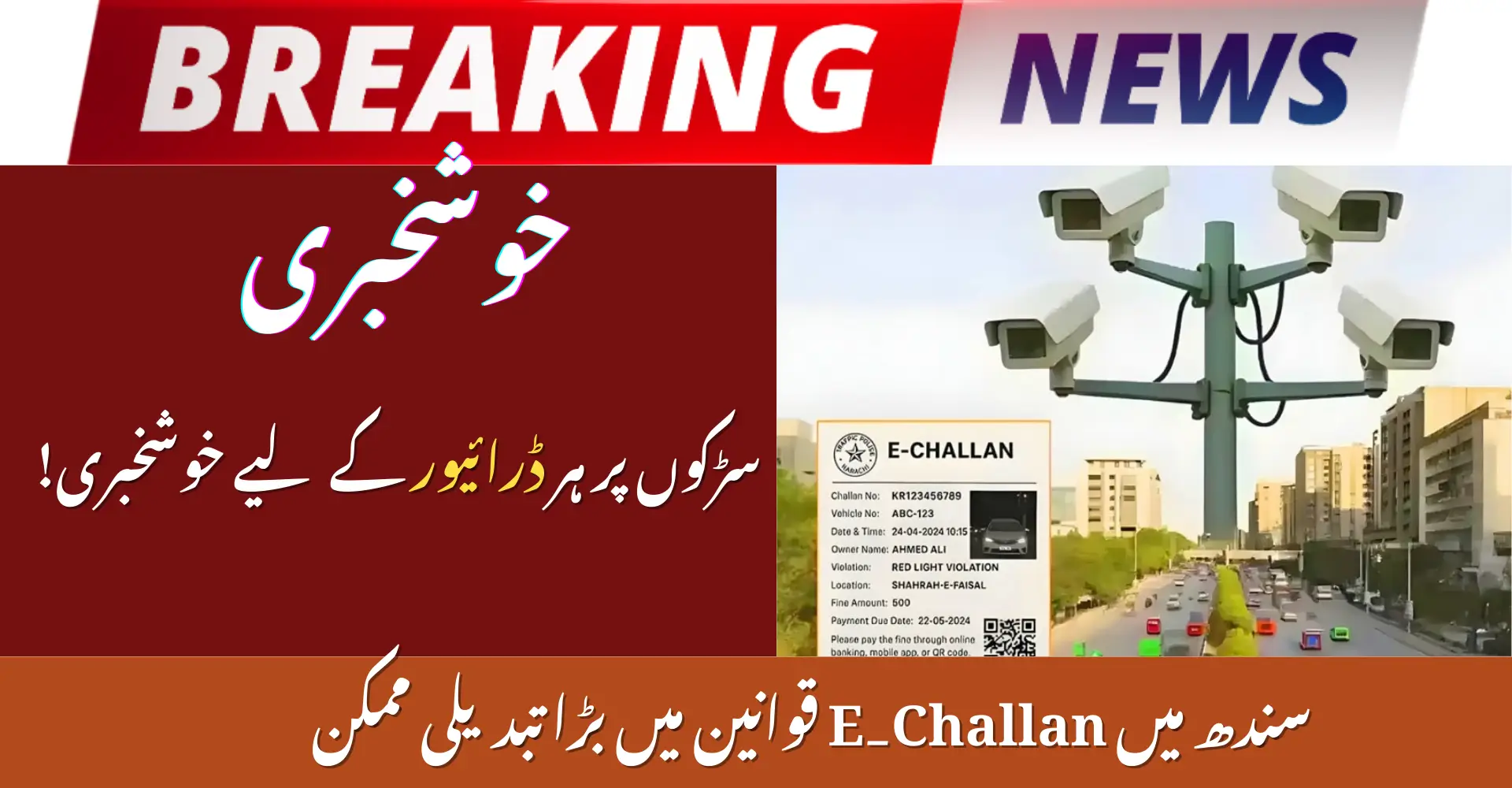
Sindh Considers Major Relief in E-Challan Fines in 2026. Sindh may soon reduce e-challan fines by half. This possible relief could benefit millions of riders and car owners across the province in 2026.
Here is everything you need to know, explained simply.

Sindh Government Reviews E-Challan Fine Structure
The Sindh Government has started reviewing the current e-challan fine system.
The main goal is to ease the financial burden on citizens while keeping traffic discipline intact.
Sources confirm that a proposal is under discussion to reduce existing fines by 50 percent.
This review comes after growing public concern about high penalties, especially for daily commuters.
Proposed Reduction in Motorcycle E-Challan Fines
Major Relief for Bike Riders
Motorcycle riders may receive the biggest benefit.
| Vehicle Type | Current Fine | Proposed Fine |
|---|---|---|
| Motorcycle | Rs. 5,000 | Rs. 2,500 |
This step could directly impact low-income workers who rely on bikes for daily travel.
Many riders complained that current fines are too high compared to income levels.

Relief for Small Engine Cars Up to 1000cc
Lower Fines for Budget Vehicles
The proposal also covers cars with engine capacity up to 1000cc.
These vehicles are mostly used by middle-class families.
If approved, fines for these cars will also be reduced by 50 percent.
This move supports affordability without compromising traffic safety.
Who Is Making the Final Decision?
A special committee has been formed to finalize the proposal.
The committee meeting is scheduled for next week under the chairmanship of the Sindh Home Minister.

Once approved:
- A formal notification will be issued
- New fine rates will become law
- Traffic police will enforce updated penalties
Why Sindh Is Considering E-Challan Relief
Key Reasons Behind the Review
Several factors pushed authorities to reconsider fines.
Public Pressure
Citizens raised concerns about excessive penalties.
Economic Conditions
Rising fuel and living costs increased financial stress.
Fair Enforcement
Authorities want balanced fines, not punishment overload.
Background: When Did the Review Start?
The committee began reviewing fines during its meeting on December 23.

Members requested:
- Updated fine recommendations
- Better enforcement measures
- Public-friendly traffic reforms
This shows the government is listening.
How the E-Challan System Works in Sindh
Quick Overview
The e-challan system uses cameras and digital monitoring.
Steps Involved
- Traffic violation captured
- Vehicle details traced
- Challan issued digitally
- SMS or online record updated
The system aims to reduce corruption and manual errors.
Will Reduced Fines Affect Traffic Discipline?
This is a common concern.
Experts believe fair fines improve compliance.

When penalties feel reasonable, people are more likely to follow rules.
High fines often lead to frustration, not discipline.
Expected Impact on Karachi and Other Cities
Cities like Karachi, Hyderabad, and Sukkur will see immediate effects.
Possible Outcomes
- Fewer public complaints
- Higher fine recovery rates
- Improved trust in traffic authorities
What Happens After Committee Approval?
Once approved:
- Official notification released
- Updated fines uploaded online
- Traffic police trained on new rates
Drivers should stay updated through official channels.
What Citizens Should Do Right Now
Until the notification is issued:

- Follow existing traffic rules
- Pay current challans on time
- Avoid assumptions about reduced fines
Changes are not active yet.
FAQs About Sindh E-Challan Fine Reduction 2026
Is Sindh reducing e-challan fines in 2026?
Yes, the Sindh government is reviewing a proposal to cut fines by 50 percent.
What is the proposed motorcycle fine?
It may be reduced from Rs. 5,000 to Rs. 2,500.
Are car owners included in the relief?
Yes, cars up to 1000cc are part of the proposal.
When will the new fines apply?
After committee approval and official notification.
Who is leading the decision process?
The Sindh Home Minister is chairing the committee.
Conclusion
Sindh’s possible e-challan fine reduction is a positive step.
It balances traffic discipline with public relief.
If approved, it will benefit millions in 2026.