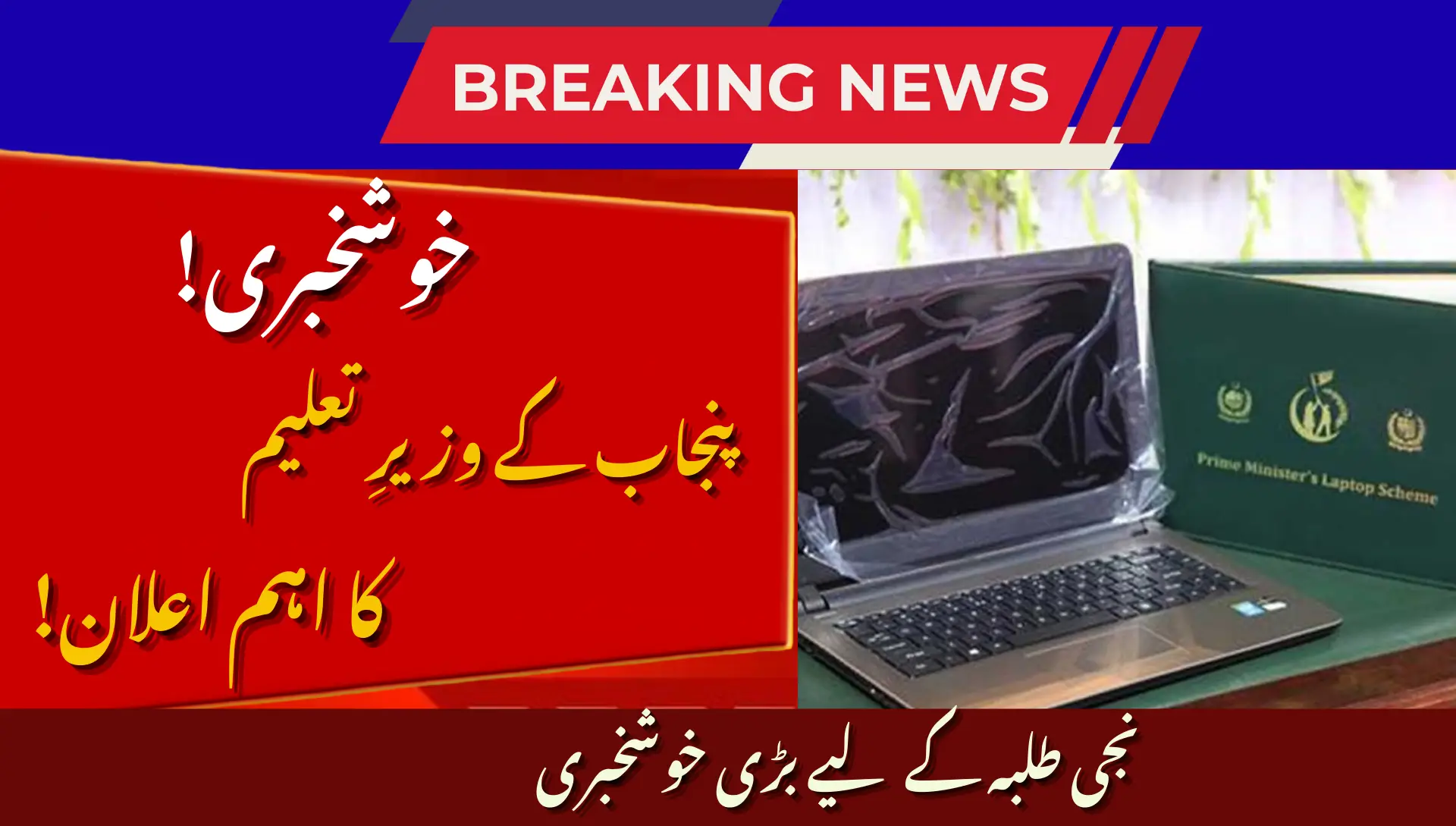
Punjab Education Minister Announces Laptops For Private Students. Are private institute students finally getting equal access to government laptop schemes?
In a major policy shift, the Punjab Education Minister Rana Sikandar Hayat has announced laptops for students of private educational institutions, marking 2026 as a transformative year for education reforms in Punjab.

This decision signals inclusivity, digital empowerment, and long-term improvements in education governance, quality, and access.
Punjab Education Reforms 2026: A Strategic Vision
The Punjab government has officially positioned 2026 as a reform-driven year, building upon the groundwork laid in 2025. According to the Education Minister, the focus is no longer limited to public institutions but now extends to private-sector students, ensuring educational equity.
Key Objectives of 2026 Education Reforms
- Improve digital access for all students
- Strengthen education governance & transparency
- Eliminate systemic inefficiencies
- Raise learning outcomes across Punjab
This reform agenda aligns with global education modernization standards and Pakistan’s broader digital transformation goals.
Laptop Scheme Expanded to Private Educational Institutions
One of the most headline-worthy announcements is the distribution of 10,000 laptops to students enrolled in private colleges and institutes — a first-of-its-kind move in Punjab.
Why This Announcement Matters
Until now, government laptop schemes largely favored:

- Public universities
- Government colleges
- State-funded institutions
The inclusion of private students:
- Promotes equal opportunity
- Supports merit-based digital access
- Recognizes the role of private education in Punjab
Laptop Scheme 2026: Key Highlights
| Feature | Details |
|---|---|
| Total Laptops | 10,000 |
| Eligible Students | Private institutes & colleges |
| Purpose | Digital learning & research |
| Announcement Year | 2026 |
| Authority | Punjab Education Department |
This initiative directly supports online learning, academic research, and skill development in an increasingly digital education ecosystem.
Performance Review of Punjab Education Department (2025–2026)
While unveiling future plans, the minister also shared a transparent review of the department’s recent performance.
Elimination of Ghost Enrollments
Over 2 million ghost enrollments were removed from the system — a critical step toward:
- Accurate education data
- Fair funding allocation
- Policy credibility
This cleanup strengthened Punjab’s education database integrity.

Teacher Rationalization & Workforce Optimization
The government addressed teacher shortages through the rationalization of 26,000 teachers, ensuring:
- Balanced teacher distribution
- Improved classroom ratios
- Better rural education access
This move enhanced education service delivery without unnecessary new hiring.
Historic Syllabus & Examination Reforms
Punjab introduced historic curriculum reforms, aligning syllabi with:
- Modern academic standards
- Skills-based education models
- Critical thinking outcomes
Shift to E-Marking Examination System
Examination boards were transitioned to e-marking systems, ensuring:
- Transparency
- Faster results
- Reduced human error
- Fair assessment practices
This digital shift reflects international best practices in examination governance.
Early Childhood Education (ECE): A National Benchmark
Recognizing that foundational learning shapes future success, Punjab prioritized Early Childhood Education (ECE).
ECE Initiatives at a Glance
- 10,000 ECE rooms established across schools
- 1.1 million children receiving daily nutrition
- Focus on learning + health integration
This program significantly improves:
- Attendance rates
- Cognitive development
- School readiness
School Infrastructure & Safety Reforms
Upgradation of Public Schools
The government upgraded 268 schools, improving:
- Classrooms
- Sanitation facilities
- Learning environments
Teacher Harassment Case Resolution
A total of 37 harassment cases involving teachers were resolved, reinforcing:
- Safe work environments
- Accountability
- Zero-tolerance policy
These reforms boost institutional trust and education sector ethics.
Merit-Based Leadership Appointments
Leadership reforms were another cornerstone of the 2026 roadmap.
Key Appointments
- 450 college principals appointed on merit
- Vice Chancellors appointed in 29 universities
Merit-based leadership enhances:
- Academic governance
- Policy execution
- Institutional autonomy
Why Including Private Students Is a Game-Changer
Private institutes educate a significant percentage of Punjab’s youth, yet policy inclusion has historically been limited.
Benefits of Laptop Inclusion for Private Students
- Reduces digital divide
- Encourages academic competition
- Supports self-learning & innovation
- Prepares students for future job markets
This decision positions Punjab as a progressive education reform leader in Pakistan.
FAQs
Will private institute students get laptops in Punjab?
Yes, the Punjab government has announced laptops for students enrolled in private educational institutions under the 2026 reform plan.

How many laptops will be distributed in 2026?
A total of 10,000 laptops will be distributed to eligible private-sector students.
Who announced the laptop scheme for private students?
Punjab Education Minister Rana Sikandar Hayat announced the expansion of the laptop scheme.
What other education reforms are planned for 2026?
Reforms include syllabus updates, e-marking exams, teacher rationalization, ECE expansion, and merit-based appointments.
Conclusion
The decision to include private institute students in the Punjab laptop scheme reflects a bold, inclusive, and future-focused education policy. Combined with governance reforms, digital examinations, ECE investment, and merit-based leadership, Punjab’s 2026 education roadmap sets a new national benchmark.