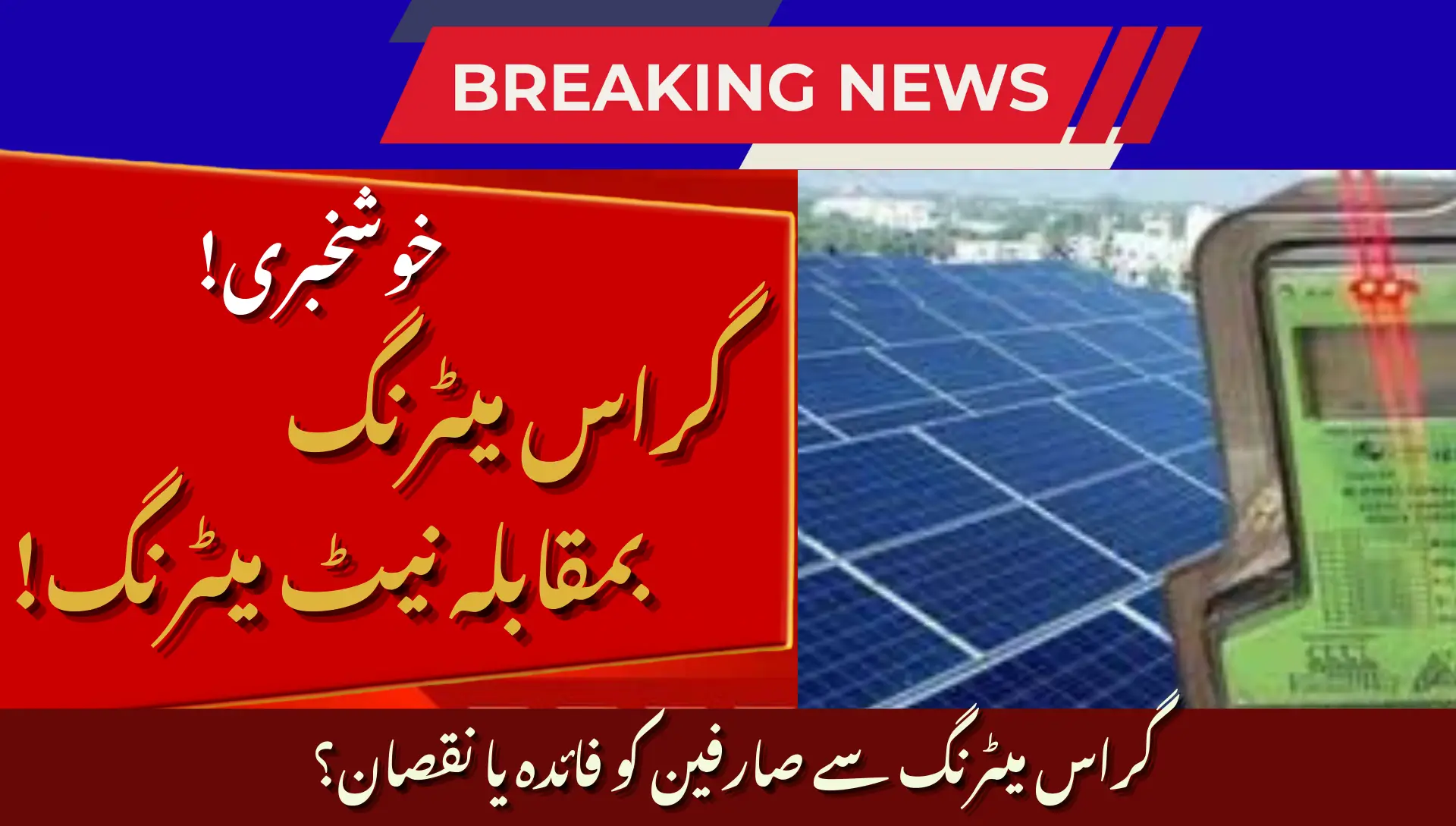
NEPRA Gross Metering. Wondering how NEPRA’s new gross metering policy will affect solar users in Pakistan? In 2026, rooftop solar rules are changing, especially for new installations. This guide explains how gross metering works, why NEPRA introduced it, and what it means for solar consumers, in simple terms.

What Is NEPRA’s New Gross Metering Policy? (2026 Update)
The National Electric Power Regulatory Authority (NEPRA) has proposed a major shift in Pakistan’s solar energy framework by replacing net metering with gross metering for new rooftop solar users.
Under the newly proposed NEPRA Prosumer Regulations (NPR):
- New solar consumers will sell all exported electricity at a fixed tariff
- Electricity imported from the grid will be billed separately
- Existing net metering users will remain protected until contract expiry
This move is aimed at reducing the financial burden on non-solar grid consumers and improving grid stability.
Net Metering vs Gross Metering: What’s the Real Difference?
Net Metering (Old System)
Under net metering:
- Exported solar units are adjusted against imported units
- Consumers only pay for the net difference
- Buyback rate: Rs. 22 per unit
Gross Metering (New System)
Under gross metering:

- All exported units are sold at a fixed tariff
- All imported units are billed at retail electricity rates
- Proposed feed-in tariff: Rs. 11.30 per unit
Quick Comparison Table
| Feature | Net Metering | Gross Metering |
|---|---|---|
| Export Adjustment | Yes | No |
| Export Rate | Rs. 22/unit | Rs. 11.30/unit |
| Import Billing | Net units | Full retail rate |
| Contract Duration | 7 years | 5 years |
| Applicable To | Existing users | New users only |
Who Will Be Affected by NEPRA Gross Metering?
1. Existing Solar Consumers
If you already have:
- A valid net metering agreement
- Signed for 7 years
No change until your contract expires. You will continue selling electricity at Rs. 22/unit.
2. New Solar Installations (2026 Onwards)
All new rooftop solar systems will:
- Fall under gross metering
- Sell electricity at Rs. 11.30/unit
- Sign 5-year contracts (extendable)
Why Did NEPRA Introduce Gross Metering?
NEPRA cited multiple economic and technical concerns behind this decision.
1. Financial Burden on Grid Consumers
According to official estimates:

- Net metering caused a loss of Rs. 101 billion in FY2026
- Resulted in Rs. 0.9 per unit tariff increase for non-solar users
- Estimated burden: Rs. 2 per unit
2. Falling Grid Electricity Sales
- Grid sales dropped by 3.2 billion units in FY2026
- Rooftop solar capacity reached 6,000 MW nationwide
Projections warn:
- By FY2034, lost sales could hit 18.8 billion units
- Financial impact: Rs. 545 billion
- Possible tariff increase: Rs. 5–6 per unit
3. Grid Stability & Excess Generation
During winter:
- Demand drops to 8,000–9,000 MW
- Solar generation peaks during daytime
NEPRA fears:
- Excess electricity
- Voltage instability
- Grid overload risks
Sri Lanka’s nationwide blackout was cited as a warning example.
4. Unsustainable Buyback Rates
- Utility-scale solar projects are now contracted at below Rs. 10/unit
- Net metering buyback at Rs. 22/unit became economically unviable
- Grid effectively acts as a free battery for solar users
Role of the Prime Minister & Power Division
On October 22, Prime Minister Shehbaz Sharif directed:

- Power Division
- NEPRA
To:
- Review solar buyback tariffs
- Assess broader economic impact
- Finalize reforms after stakeholder consultation
NEPRA has invited public feedback within 30 days and may conduct a public hearing before final approval.
Smart Meters & Control Measures
To address misuse:
- DISCOs are installing smart meters
- Real-time export monitoring
- Prevents cases where:
- Sanctioned load: 10 kW
- Actual export: 20 kW
These meters will help regulate:
- Export limits
- Grid safety
- Transparent billing
Is Gross Metering Bad for Solar Users?
Not entirely.

Pros
- More predictable tariff structure
- Grid stability improves
- Long-term tariff control for all consumers
Cons
- Lower export earnings
- Longer payback period
- Less incentive for oversized systems
Solar will still reduce bills but ROI calculations will change.
Should You Install Solar in 2026?
Yes, but system sizing matters more than ever.
Best Strategy Under Gross Metering
- Size system for self-consumption
- Reduce reliance on exports
- Use batteries if feasible
- Optimize daytime usage
FAQs
What is NEPRA gross metering?
Gross metering is a system where all solar electricity exported to the grid is sold at a fixed rate, while imported electricity is billed separately.
Will existing net metering users be affected?
No. Existing users will continue under net metering until their 7-year contracts expire.
What is the new solar buyback rate in Pakistan?
For new users, NEPRA has proposed a feed-in tariff of Rs. 11.30 per unit.

Is gross metering compulsory in Pakistan?
Yes, once approved, it will apply to all new rooftop solar installations.
Does gross metering increase payback time?
Yes, compared to net metering, payback periods will be longer due to lower export rates.
Conclusion
NEPRA’s shift from net metering to gross metering marks a turning point in Pakistan’s solar journey. While it reduces incentives for excess exports, it aims to create a more balanced, stable, and sustainable power system for all consumers.