
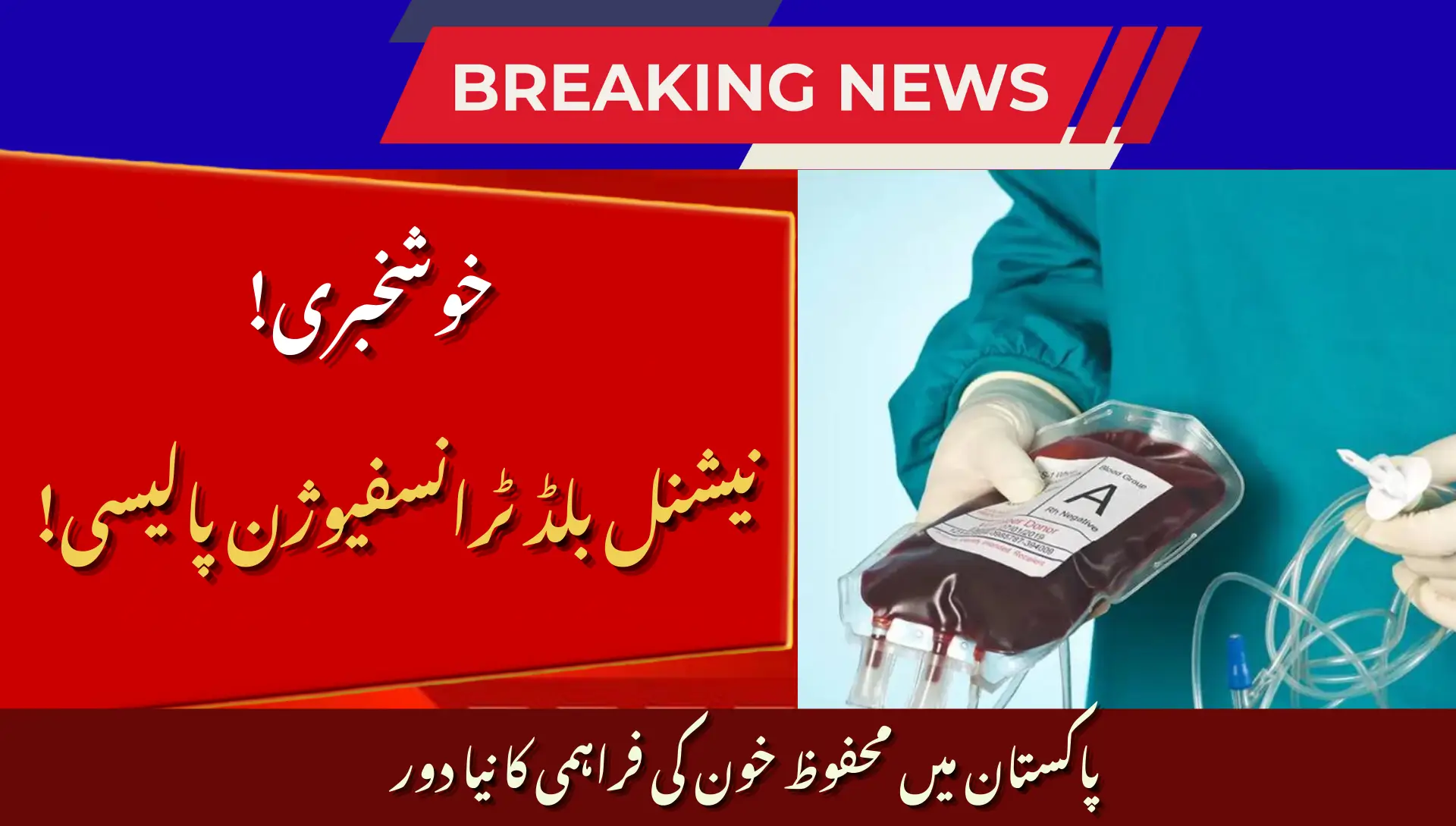
Pakistan Implements National Blood Transfusion Policy: 2026 Guide. Pakistan has taken a historic step in healthcare reform by implementing its first-ever National Blood Transfusion Policy. Approved by the federal cabinet and facilitated by the Special Investment Facilitation Council (SIFC), this policy aims to improve blood safety, ensure plasma self-reliance, and modernize the national health system in 2026 and beyond.

Pakistan’s First National Blood Transfusion Policy Explained
The implementation of the National Blood Transfusion Policy of Pakistan marks a turning point in the country’s healthcare governance. For decades, Pakistan struggled with fragmented blood transfusion systems, inconsistent regulations, and safety concerns.
Why This Policy Matters in 2026
- No unified national framework existed before
- Blood safety standards varied by province
- Plasma wastage and imports increased healthcare costs
This policy introduces a centralized, regulated, and technology-driven blood transfusion ecosystem aligned with global best practices.
Role of SIFC in Policy Implementation
The Special Investment Facilitation Council (SIFC) played a critical role in turning a long-pending proposal into reality.
Key Contributions of SIFC
- Inter-ministerial coordination
- Federal and provincial alignment
- Stakeholder engagement across health regulators
According to health officials, without SIFC’s facilitation, such cross-provincial consensus would have taken years.

Entity Signals (NLP):
Special Investment Facilitation Council, Federal Cabinet of Pakistan, Ministry of National Health Services
What Is Plasma Fractionation & Why It’s a Game-Changer
One of the most revolutionary aspects of the policy is the introduction of plasma fractionation technology.
What Is Plasma Fractionation?
Plasma fractionation is a biomedical process that separates plasma into life-saving components such as:
- Immunoglobulins
- Albumin
- Clotting factors
Benefits for Pakistan
| Benefit | Impact |
|---|---|
| Self-reliance | Reduced dependency on imports |
| Cost efficiency | Lower healthcare expenditure |
| Export potential | Entry into international biotech markets |
| Emergency readiness | Improved response to disasters |
This move positions Pakistan among countries investing in advanced biotechnology healthcare systems.

Strengthening Blood Safety & Quality Control
Blood safety remains a major public health concern in Pakistan. The new policy directly addresses this issue.
Key Safety Improvements
- Mandatory donor screening
- Centralized blood bank registration
- Digital traceability of blood products
- Compliance with WHO standards
Diseases the Policy Aims to Control
- Hepatitis B & C
- HIV/AIDS
- Blood-borne bacterial infections
By enforcing uniform standards nationwide, the policy significantly reduces transfusion-related risks.
Provincial Authorities & Expert Endorsements
The policy has received strong backing from healthcare professionals and regulators.
Expert Opinions
- Dr. Darnaz Jamal, Secretary Sindh Blood Transfusion Authority, termed it a “long-overdue reform finally realized”.
- Brigadier (Retd) Dr. Nazhat Mushahid, hematology expert, highlighted its alignment with global hematology practices.
- Dr. Ubaidullah, CEO DRAP, emphasized collective governance and regulatory maturity.
Entity Signals:
Drug Regulatory Authority of Pakistan (DRAP), Sindh Blood Transfusion Authority, Provincial Governments

Economic & Export Potential of Plasma-Derived Products
Beyond healthcare, the policy opens doors for economic diversification.
Export Opportunities
- Plasma-derived medicines
- Biotech raw materials
- Regional healthcare supply chains
With proper compliance, Pakistan can access international pharmaceutical markets, particularly in the Middle East and Africa.
Challenges in Implementation & How Pakistan Can Overcome Them
While the policy is visionary, execution will determine its success.
Potential Challenges
- Infrastructure gaps in rural areas
- Skilled workforce shortages
- Regulatory enforcement consistency
Recommended Solutions
- Public-private partnerships
- Capacity-building programs
- Digital health monitoring systems
How This Policy Aligns with Global Health Standards
The policy reflects compliance with:

- World Health Organization (WHO) blood safety guidelines
- International Society of Blood Transfusion (ISBT) standards
- Sustainable Development Goal 3 (Good Health & Well-being)
This alignment enhances Pakistan’s global health credibility.
Quick Comparison: Before vs After Policy
| Aspect | Before Policy | After Policy |
|---|---|---|
| Regulation | Fragmented | Centralized |
| Plasma usage | Wasted/exported raw | Fractionated locally |
| Safety | Inconsistent | Standardized |
| Global access | Limited | Export-ready |
FAQs
What is Pakistan’s National Blood Transfusion Policy?
It is Pakistan’s first unified national framework regulating blood safety, plasma usage, and transfusion standards.
When was the policy implemented?
The policy received federal approval and implementation support in 2026.
What role did SIFC play?
SIFC facilitated coordination between federal ministries, provinces, and regulators.

What is plasma fractionation used for?
It produces essential medicines like immunoglobulins and clotting factors.
Will this policy improve healthcare exports?
Yes, it enables Pakistan to enter global plasma-derived product markets.
Conclusion
Pakistan’s implementation of the National Blood Transfusion Policy is more than a regulatory milestone—it is a strategic healthcare transformation. By ensuring blood safety, enabling plasma fractionation, and unlocking export potential, the policy sets Pakistan on a sustainable path toward healthcare self-reliance in 2026 and beyond.