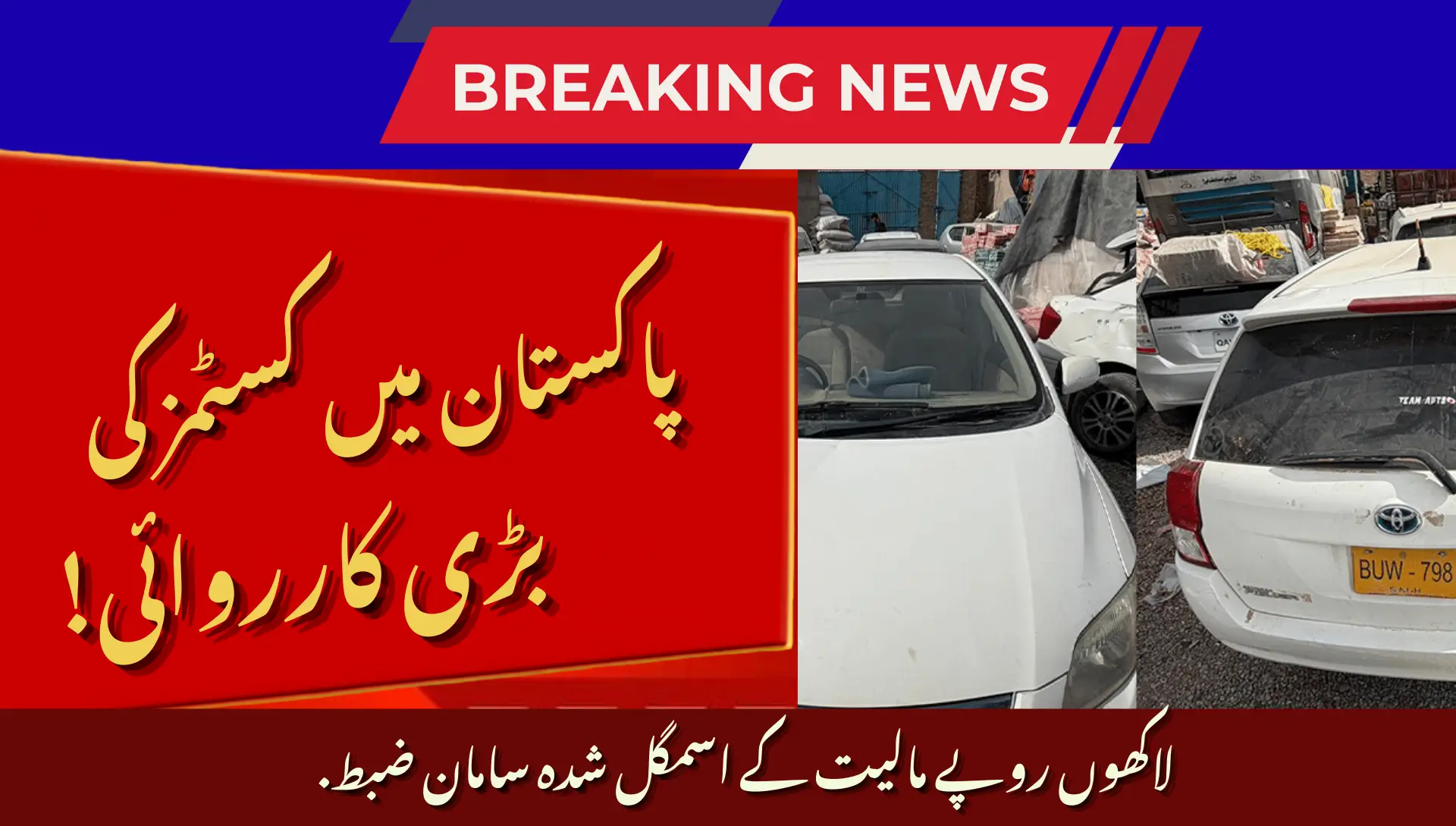
Customs Seizes Smuggled Goods Worth Rs. 121.6 Million in Quetta – 2026 Guide. Customs authorities near Quetta have seized smuggled goods worth Rs. 121.6 million, dealing a major blow to illegal trade networks in Balochistan. The operation highlights Pakistan’s intensified crackdown on non-custom-paid (NCP) vehicles and smuggling activities in 2026.

Smuggling not only damages the economy but also fuels undocumented trade and this latest seizure shows how seriously enforcement agencies are taking the issue.
Customs Enforcement Operation Near Quetta: What Happened?
Joint Action by Customs, FC North & Loralai Police
The Collectorate of Customs Enforcement Quetta, with the active support of FC North and Loralai Police, conducted a targeted operation at Rakhni, a strategically sensitive area near Quetta often used for smuggling routes.
The coordinated raid resulted in the interception of multiple vehicles carrying illegal goods destined for local markets.
Details of Seized Smuggled Items
Below is a clear breakdown of the confiscated items for quick understanding:

| Seized Items | Details |
|---|---|
| NCP Vehicles | 9 non-custom-paid vehicles |
| Cigarettes | Smuggled foreign brands |
| Betel Nuts | High-value imported stock |
| Chinese Salt | Illegal commercial quantity |
| Gutka | Banned chewing tobacco |
Total Estimated Value: Rs. 121.6 Million
These items were immediately taken into official custody for further legal processing.
Why NCP Vehicles Are a Major Problem in Pakistan
What Are NCP Vehicles?
Non-Custom-Paid (NCP) vehicles are illegally imported automobiles that evade customs duties and taxes. These vehicles are often:
- Smuggled through border areas
- Sold at lower prices than legal imports
- Used for further illegal trade activities
Economic & Security Risks
NCP vehicles pose serious threats including:

- Loss of billions in national revenue
- Increased black-market trade
- Potential use in criminal activities
- Weakening of documented economy
This is why customs enforcement against NCP vehicles has become a top national priority in 2026.
Legal Action Under Customs Act 1969
Investigations Officially Underway
According to customs officials, investigations have begun under the Customs Act, 1969, Pakistan’s primary law governing import, export, and trade violations.
Possible Penalties Include:
- Heavy monetary fines
- Confiscation of vehicles and goods
- Criminal charges against smugglers
- Imprisonment in serious cases
The seized goods will remain under customs control until legal proceedings are completed.
FBR Reaffirms Zero-Tolerance Policy on Smuggling
Official Statement from FBR Spokesperson
The Federal Board of Revenue (FBR) spokesperson reiterated the government’s commitment to:

- Eliminating smuggling networks
- Cracking down on illegal trade
- Strengthening border enforcement
- Protecting Pakistan’s tax base
This operation aligns with FBR’s broader strategy to stabilize the economy and improve revenue collection.
Smuggling in Balochistan: A Persistent Challenge
Why Border Regions Are Vulnerable
Balochistan’s vast terrain and proximity to international borders make it a frequent target for smugglers dealing in:
- Cigarettes
- Fuel
- Vehicles
- Food items
- Tobacco products
Despite these challenges, customs authorities have significantly improved surveillance, intelligence sharing, and inter-agency coordination in recent years.
Impact of Smuggling on Pakistan’s Economy
How Illegal Trade Hurts Everyone
Smuggling directly affects:

- Government revenue
- Local manufacturers
- Legitimate importers
- Employment opportunities
When illegal goods flood markets, legal businesses struggle to compete, leading to factory shutdowns and job losses.
Customs Enforcement Strategy in 2026
What’s Changing This Year?
In 2026, Pakistan Customs has upgraded its enforcement approach by:
- Using real-time intelligence systems
- Strengthening cooperation with law enforcement agencies
- Increasing border checkpoints
- Launching awareness campaigns
These measures are already producing results, as seen in the Quetta seizure case.
Related Economic Context
This enforcement drive comes amid broader economic developments, including:

- Strengthening of the Pakistani Rupee
- Crackdown on undocumented economy
- Reforms in customs valuation and taxation
Together, these steps aim to stabilize Pakistan’s financial system and restore investor confidence.
FAQs
What items were seized near Quetta?
Customs seized NCP vehicles, smuggled cigarettes, betel nuts, Chinese salt, and gutka worth Rs. 121.6 million.
Which law applies to this seizure?
The case is being investigated under the Customs Act, 1969.
Why is gutka illegal in Pakistan?
Gutka is banned due to serious health risks and is often smuggled to bypass regulations.
What is the role of FBR in customs enforcement?
FBR oversees Pakistan Customs and formulates policies to prevent smuggling and tax evasion.
Will smuggling cases increase penalties in 2026?
Yes, authorities have signaled stricter penalties and faster prosecutions to deter smugglers.
Conclusion
The seizure of smuggled goods worth Rs. 121.6 million near Quetta is a strong signal that Pakistan’s customs authorities are serious about dismantling illegal trade networks. With coordinated efforts between Customs, FC North, and local police, enforcement actions are becoming more effective and impactful.