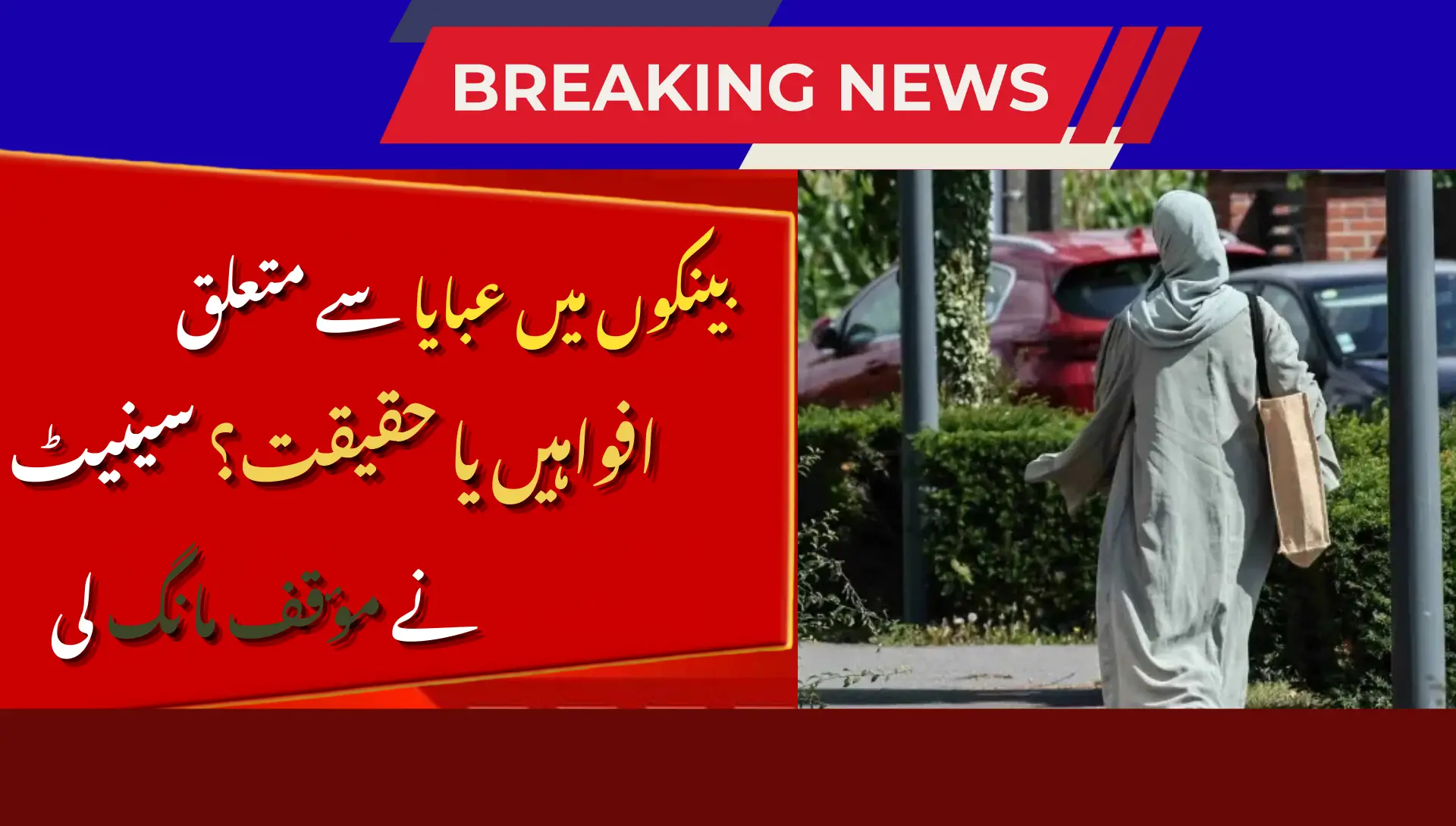
Senate Seeks Clarity on Alleged Abaya Rules in Banks For 2026. Are Pakistani banks forcing female employees to wear abayas?
In 2026, this question reached the Senate floor as lawmakers sought clarity on alleged dress code policies in commercial banks. Bank officials responded firmly, rejecting these claims and explaining their stance on professional workplace attire.

This article breaks down what really happened, why it matters, and how it impacts workplace rights, banking regulations, and corporate culture in Pakistan.
What Triggered the Senate’s Concern Over Abaya Rules?
The issue surfaced during a session of the Senate Standing Committee on Finance and Revenue, when Senator Zarqa Suharwardy Taimur raised complaints reportedly received from female banking staff.
Key Allegations Highlighted in the Senate
- Female bank employees were allegedly pressured to wear abayas
- Complaints suggested informal enforcement, not written policies
- Concerns over personal freedom vs workplace standards
These claims quickly sparked debate, especially given Pakistan’s diverse cultural and professional environments.
Bank Officials Respond: No Mandatory Abaya Policy
Senior banking officials were quick to reject the allegations, stating clearly that:

Official Position of Commercial Banks
- No bank enforces abaya-wearing
- No religious dress is mandatory
- Banks only require modest and professional attire
- Dress expectations align with international corporate norms
Officials emphasized that banks function as professional financial institutions, not religious authorities.
“We do not dictate religious clothing. Our focus is professionalism, dignity, and workplace ethics,” a senior official clarified.
Understanding ‘Modest & Professional Attire’ in Banking
What Banks Typically Expect
Banks explained that their dress guidelines focus on:
- Clean, formal clothing
- Respectful appearance
- No extreme or inappropriate fashion
Examples of Acceptable Professional Wear
| For Women | For Men |
|---|---|
| Formal shalwar kameez | Dress shirts |
| Business suits | Trousers |
| Headscarf (optional) | Blazers (optional) |
Abaya is optional, not required.

Senator Talha Mahmood’s Religious Perspective
During the discussion, Senator Talha Mahmood offered a religious viewpoint, suggesting that dress guidelines could be inspired by Islamic principles.
References Made
- Surah An-Nur
- Surah Al-Ahzab
However, he clarified that:
- Religious principles should not override professional norms
- Any guidance must remain non-coercive
This balanced stance highlighted Pakistan’s ongoing challenge:
Aligning faith, freedom, and professionalism.
Why This Debate Matters in 2026
This issue goes beyond clothing — it touches fundamental workplace rights.

Key Implications
- Gender equality in professional spaces
- Employee autonomy
- Corporate ethics & HR transparency
- Legal clarity on informal workplace pressure
In an era where Pakistan’s banking sector is modernizing rapidly, clarity matters more than ever.
Legal & HR Perspective: Are Dress Codes Enforceable?
Pakistan Labour & Workplace Norms
According to HR best practices:
- Dress codes must be written and transparent
- Employees cannot be forced into religious expression
- Informal pressure can be legally questionable
Public Reaction & Media Coverage
The issue gained traction across:
- National news outlets
- Social media platforms
- Women’s rights forums
Public Opinion Trends
- Majority supported choice-based attire
- Professionals favored clear HR policies
- Religious scholars emphasized no compulsion in faith
Parallel Discussion: Pakistan Single Window (PSW) Progress
Beyond dress code concerns, the committee also reviewed progress on the Pakistan Single Window (PSW) platform.

What Is Pakistan Single Window?
PSW is a digital trade facilitation system that:
- Integrates 23+ government departments
- Provides a single online interface
- Reduces paperwork for traders & investors
Committee’s Feedback
- Appreciated current progress
- Requested a detailed presentation
- Sought clarity on future upgrades
Why PSW Matters for Pakistan’s Economy
Key Benefits
- Faster import/export processing
- Reduced corruption
- Improved ease of doing business
- Increased foreign investment confidence
This shows the committee’s dual focus on social governance and economic reform.
FAQs
Are banks in Pakistan forcing women to wear abayas?
No. Bank officials have officially denied any mandatory abaya policy.
What dress code do Pakistani banks follow?
Banks require modest, professional attire aligned with corporate standards.

Did the Senate take action on the complaints?
The Senate reviewed the matter, heard responses, and sought clarification.
What role did religion play in the discussion?
Some senators referenced Islamic principles, but emphasized no compulsion.
What is Pakistan Single Window (PSW)?
PSW is a digital platform offering traders access to 23+ government services.
Conclusion
The Senate’s inquiry into alleged abaya rules in banks highlights the importance of clarity, transparency, and employee rights in Pakistan’s evolving corporate sector. With officials denying any enforced dress code and lawmakers promoting balance, the issue underscores a broader message: professionalism should never come at the cost of personal freedom.