
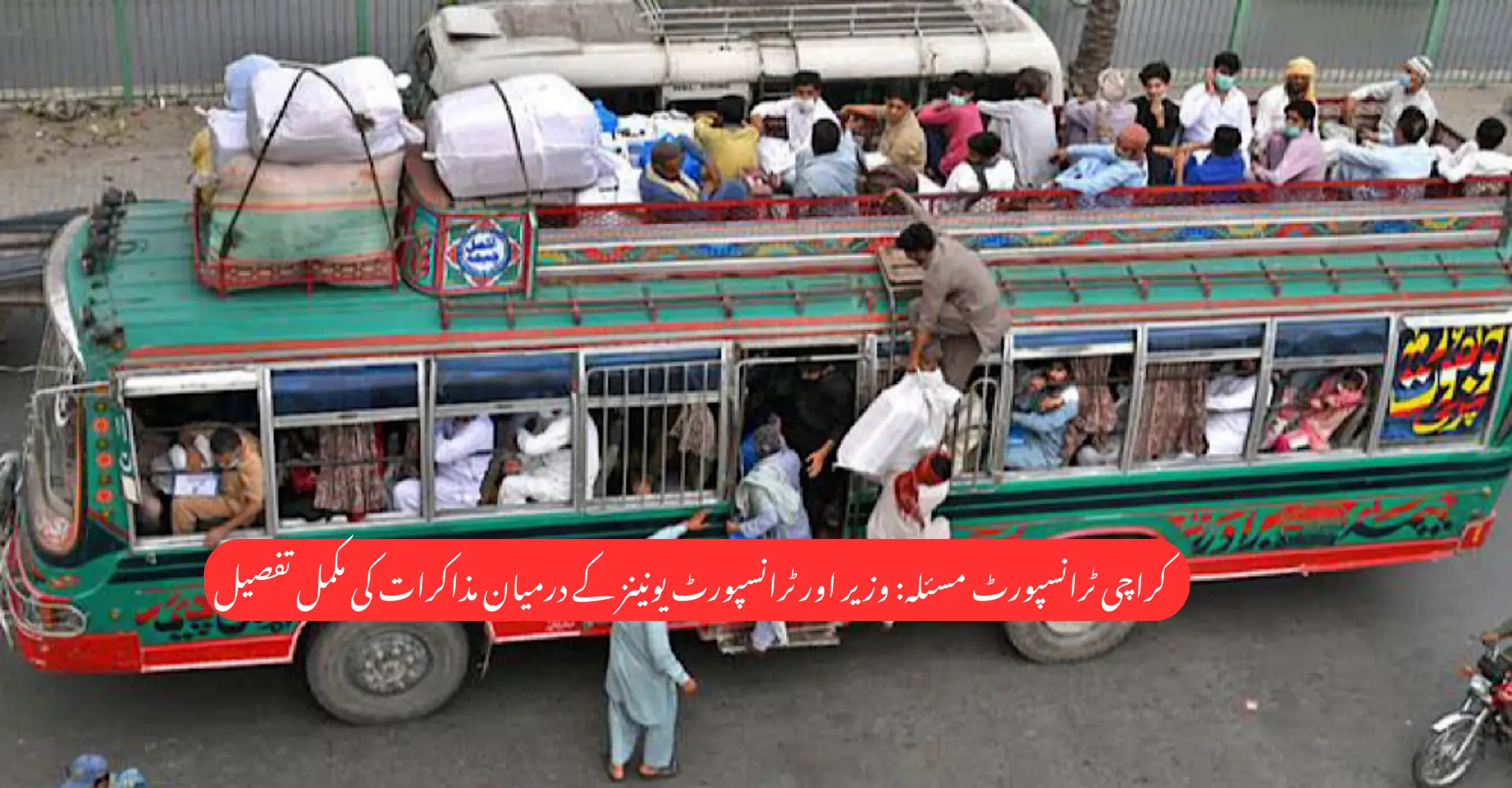
Minister Negotiations With Transport Unions in Karachi – A Complete Guide 2026. Is Pakistan facing a nationwide transport shutdown again? In 2026, negotiations between the federal government and transport unions in Karachi have once again taken center stage. With transporters threatening a countrywide strike, all eyes are on whether talks can prevent economic disruption.

This article breaks down why the minister is negotiating with transport unions, what transporters are demanding, and how it could affect daily life, businesses, and supply chains across Pakistan.
Why Minister Is Holding Negotiations With Transport Unions
Federal Minister for Communications Abdul Aleem Khan is scheduled to hold high-level negotiations with transport unions in Karachi as tensions rise ahead of a potential nationwide transport strike.
Key Purpose of the Meeting
- Prevent a wheel-jam strike
- Address transporters’ concerns regarding traffic fines and enforcement
- Avoid economic and supply-chain disruption
- Restore trust between transport bodies and the government
The negotiations are seen as a last-minute attempt to resolve issues through dialogue instead of confrontation.
Background of the Transport Strike Threat
Transport unions across Pakistan have announced a complete shutdown of transport services, warning that the country could come to a standstill if their demands are not met.

Transport Bodies Involved
- All Pakistan Transport Federation
- Inter-City Transport Union
- Inter-District Transport Union
- Goods Transport Alliance
- Student & Government Employee Pickup-and-Drop Unions
According to union leaders, transport services from Khyber Pakhtunkhwa to Karachi may be suspended simultaneously.
Main Demands of Transport Unions
Transporters argue that recent traffic enforcement policies have made operations financially unsustainable.
Top Demands Explained
- Withdrawal of heavy traffic fines
- End to vehicle impoundment practices
- Review of the new traffic challan system
- Protection against alleged harassment by authorities
- Implementation of previously promised reforms
Union leaders claim the government failed to honor earlier commitments, forcing them to escalate protests.
Impact of a Nationwide Transport Strike
If negotiations fail, Pakistan could experience one of the largest transport shutdowns in recent years.

Services Likely to Be Affected
| Sector | Expected Impact |
|---|---|
| Goods Transport | Complete suspension |
| Public Transport | Buses, wagons halted |
| Rail Services | Partial to full disruption |
| Markets & Malls | Closure expected |
| Factories & Industry | Production slowdown |
| Banking Sector | Limited operations |
| Petrol Pumps | Fuel shortages possible |
| Schools & Universities | Closures likely |
Such a shutdown would directly affect supply chains, inflation, and daily mobility.
Why Karachi Is Central to These Talks
Karachi is Pakistan’s economic and logistics hub, making it the most strategic city for negotiations.
Karachi’s Role in National Transport
- Largest seaport and trade gateway
- Major goods distribution center
- Backbone of inter-provincial logistics
Any transport strike starting in Karachi would ripple across the entire country within hours.
What the Government Is Offering
Sources close to the negotiations suggest the government may consider policy adjustments instead of a complete rollback.

Possible Government Responses
- Gradual review of traffic fines
- Digitization of challan systems for transparency
- Stakeholder consultations with transport unions
- Time-bound implementation of reforms
However, unions insist that immediate relief is required to call off the strike.
Statements From Transport Union Leaders
Transport federation representatives have issued strong warnings regarding the strike.
“Pakistan will be completely shut if our demands are ignored,” said union spokespersons including Asif Khan, Lala Suhail, and Tariq Khan.
They emphasized that the decision was made after consultations with multiple sectors, indicating broad support for the strike.

Economic Consequences If Talks Fail
A prolonged transport shutdown could severely impact Pakistan’s economy.
Potential Economic Fallout
- Disruption in food and fuel supply
- Increase in commodity prices
- Export and import delays
- Losses to small and medium businesses
- Reduced daily wage employment
Economists warn that even a 24-hour strike could cost billions in losses.
FAQs
Why are transport unions protesting in Pakistan?
Transport unions are protesting against heavy traffic fines, vehicle impoundments, and alleged harassment by enforcement authorities.
Who is negotiating with transport unions in Karachi?
Federal Minister for Communications Abdul Aleem Khan is leading negotiations with transport union representatives.

Will there be a transport strike in Pakistan in 2026?
A nationwide strike is possible if negotiations fail, although talks are ongoing to avoid shutdown.
How will a transport strike affect daily life?
Public transport, markets, schools, fuel supply, and goods delivery could be severely disrupted.
What is the government doing to resolve the issue?
The government is holding negotiations and may revise traffic enforcement policies to address concerns.
Conclusion
The negotiations between the federal minister and transport unions in Karachi represent a critical moment for Pakistan’s transport sector in 2026. With economic stability, public mobility, and supply chains at stake, both sides face immense pressure to reach a workable solution.