Pakistan Dual Economies 2026: Why a Stock Market Boom Masks a Factory Floor Bust. Why is Pakistan’s stock market booming while factories are shutting down in 2026?
This article explains Pakistan’s dual economies, where record-breaking PSX gains coexist with industrial decline, job losses, and factory closures.

Pakistan’s Dual Economies Explained
Pakistan’s economy in 2026 presents a striking contradiction. On one side stands a thriving stock market, celebrated by policymakers and investors. On the other lies a struggling industrial sector, marked by silent machines, rising unemployment, and shrinking exports.
This divergence has sparked a crucial debate: Who is Pakistan’s economic recovery really benefiting?
The Stock Market Boom: Why PSX Is Surging in 2026
KSE-100 Index Performance and Investor Sentiment
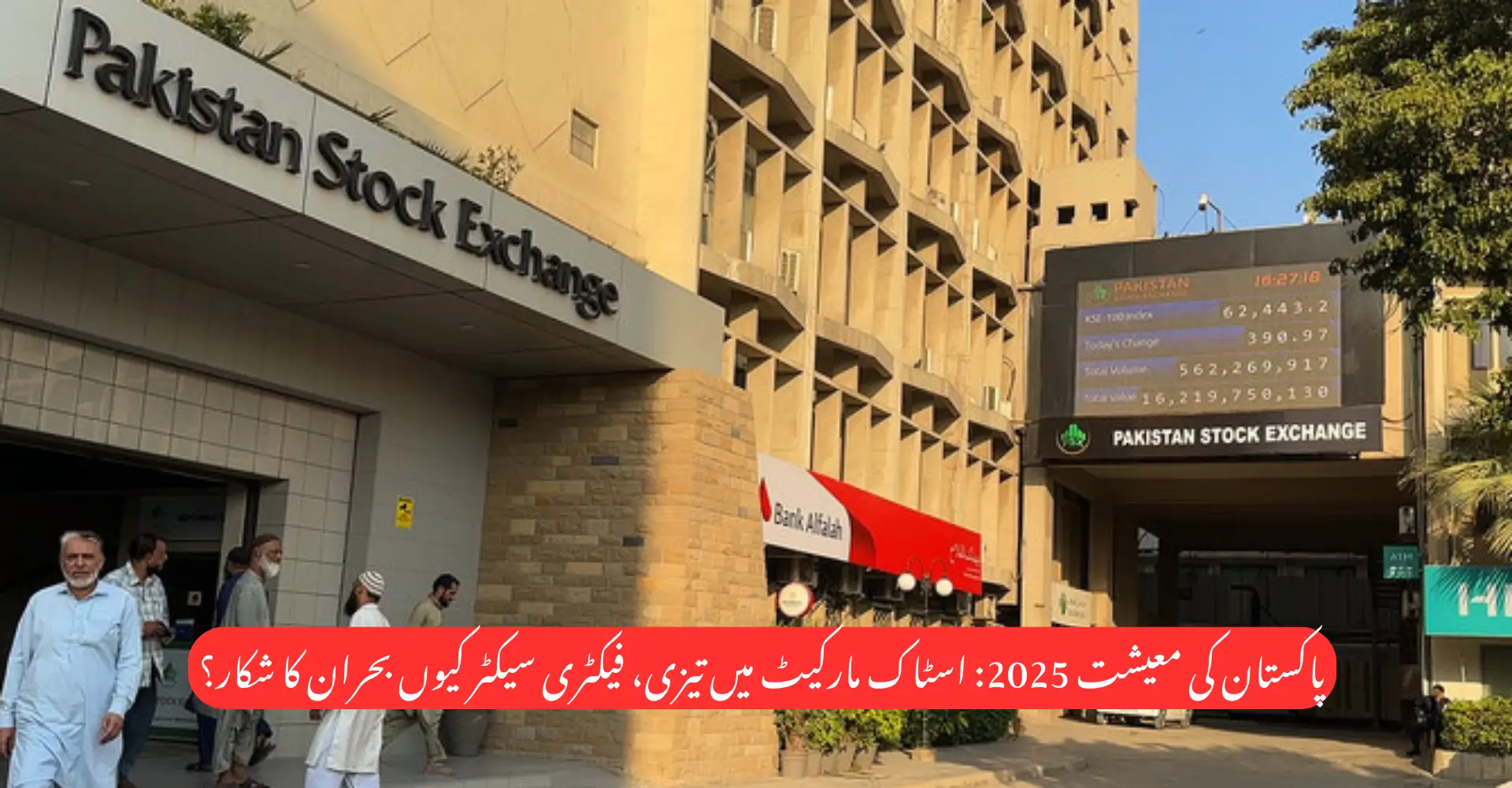
By late 2026, the Pakistan Stock Exchange (PSX) emerged as one of the best-performing markets in the region. The KSE-100 index surged nearly 40%, outperforming many Asian peers.
Key Drivers Behind the PSX Rally:
- Stabilization under IMF-backed reforms
- Controlled inflation below 5%
- Currency stability after prolonged volatility
- Shift of local capital from real estate to equities
- Lower bank deposit returns pushing investors toward stocks
This rally is largely liquidity-driven, benefiting institutional investors, brokers, and asset holders rather than productive sectors.
Macroeconomic Stabilization: IMF Success or Illusion?
Fiscal Discipline and Monetary Tightening
Pakistan narrowly avoided sovereign default in 2023–24. The turnaround was powered by:

- A $7 billion IMF Extended Fund Facility
- Aggressive interest rate hikes by the State Bank of Pakistan
- Sharp cuts in subsidies
- Increased taxation to plug fiscal gaps
On paper, macroeconomic indicators improved:
- Inflation cooled
- Forex reserves stabilized
- Rupee volatility eased
But stabilization came at a high cost to the real economy.
The Factory Floor Bust: Inside Pakistan’s Industrial Collapse
Textile Industry in Crisis
The textile sector, responsible for over 50% of Pakistan’s exports, is facing its worst downturn in decades.
By November 2026:
- Over 100 large textile mills closed
- Nearly 400 cotton ginning units shut down
- Thousands of workers laid off
Factories in Faisalabad, Gujranwala, and Karachi now operate far below capacity—or not at all.

Energy Costs: The Biggest Killer of Industrial Competitiveness
Electricity Tariffs vs Regional Competitors
The single largest factor behind industrial decline is unaffordable energy.
| Country | Industrial Power Cost (per kWh) |
|---|---|
| Pakistan | 12–14 cents |
| Bangladesh | 7–8 cents |
| Vietnam | 6–7 cents |
| India | 6–9 cents |
In low-margin export industries, this gap makes Pakistani products uncompetitive globally.
Circular Debt and Power Sector Dysfunction
Pakistan’s energy sector remains trapped in circular debt exceeding Rs 2.4 trillion, caused by:
- Inefficient distribution companies
- Power theft
- Capacity payments to idle plants
- Policy failures over decades
To satisfy IMF conditions, subsidies were withdrawn—passing the burden directly to industry.
SMEs Under Pressure: The Silent Collapse
Small Businesses Are Paying the Highest Price
Unlike large conglomerates, SMEs lack financial buffers. Rising electricity bills, aggressive taxation, and weak demand have forced thousands to close quietly.

Affected sectors include:
- Engineering workshops
- Auto parts manufacturers
- Plastic and packaging units
- Sports goods exporters
These closures rarely make headlines but cause deep structural damage to the economy.
Taxation Policies: Penalizing the Documented Economy
Why Industry Feels Targeted
Pakistan’s tax structure continues to rely heavily on:
- Salaried individuals
- Existing manufacturers
- Registered businesses
Meanwhile, key sectors remain undertaxed:
- Retail
- Agriculture
- Real estate
This imbalance:

- Discourages documentation
- Pushes firms into informality
- Shrinks the tax base further
Brain Drain in 2026: Exporting People Instead of Products
Record Emigration Levels
Pakistan is witnessing one of the largest talent exoduses in its history.
- 720,000 workers left in 2025
- Nearly 700,000 more departed in 2026 (by November)
This includes:
- Engineers
- Doctors
- IT professionals
- Skilled technicians
While remittances help the current account, the loss of human capital weakens long-term growth.
The Core Paradox of Pakistan’s Dual Economies
The same policies that saved Pakistan from default are now choking its productive engine.
Financial Stability vs Economic Growth
- Stock market gains benefit asset holders
- Industrial contraction destroys jobs
- Consumption is suppressed
- Export capacity erodes
A recovery without factories is not sustainable growth.

Why the Stock Market Boom Doesn’t Reflect Economic Health
The PSX rally reflects:
- Speculation
- Liquidity
- Short-term confidence
It does not reflect:
- Industrial output
- Employment growth
- Export competitiveness
This disconnect is dangerous for policymakers relying solely on headline indicators.
What Pakistan Needs: Policy Shift in 2026 and Beyond
Key Reforms to Bridge the Economic Divide
1. Energy Sector Reform
- Competitive industrial tariffs
- Renegotiation of capacity payments
- Reduction in line losses
2. Export-Led Industrial Policy
- Targeted incentives for exporters
- Long-term energy pricing certainty
- Access to affordable financing
3. Broadening the Tax Base
- Retail and agriculture documentation
- Lower corporate tax rates
- Reduced reliance on indirect taxes
FAQs
Why is Pakistan’s stock market rising in 2026?
The PSX is rising due to IMF-backed stabilization, controlled inflation, and increased liquidity—not because of strong industrial growth.
Why are factories closing despite economic recovery claims?
High energy costs, heavy taxation, and weak export competitiveness are forcing factories to shut down.
Is Pakistan’s economic recovery sustainable?
Without industrial revival and job creation, the current recovery is fragile and unequal.
How does energy pricing affect exports?
High electricity tariffs make Pakistani exports more expensive than regional competitors, reducing global demand.
Conclusion
Pakistan’s dual economies in 2026 expose a harsh reality. Financial markets may celebrate, but factories remain silent. Stability without production is not prosperity.