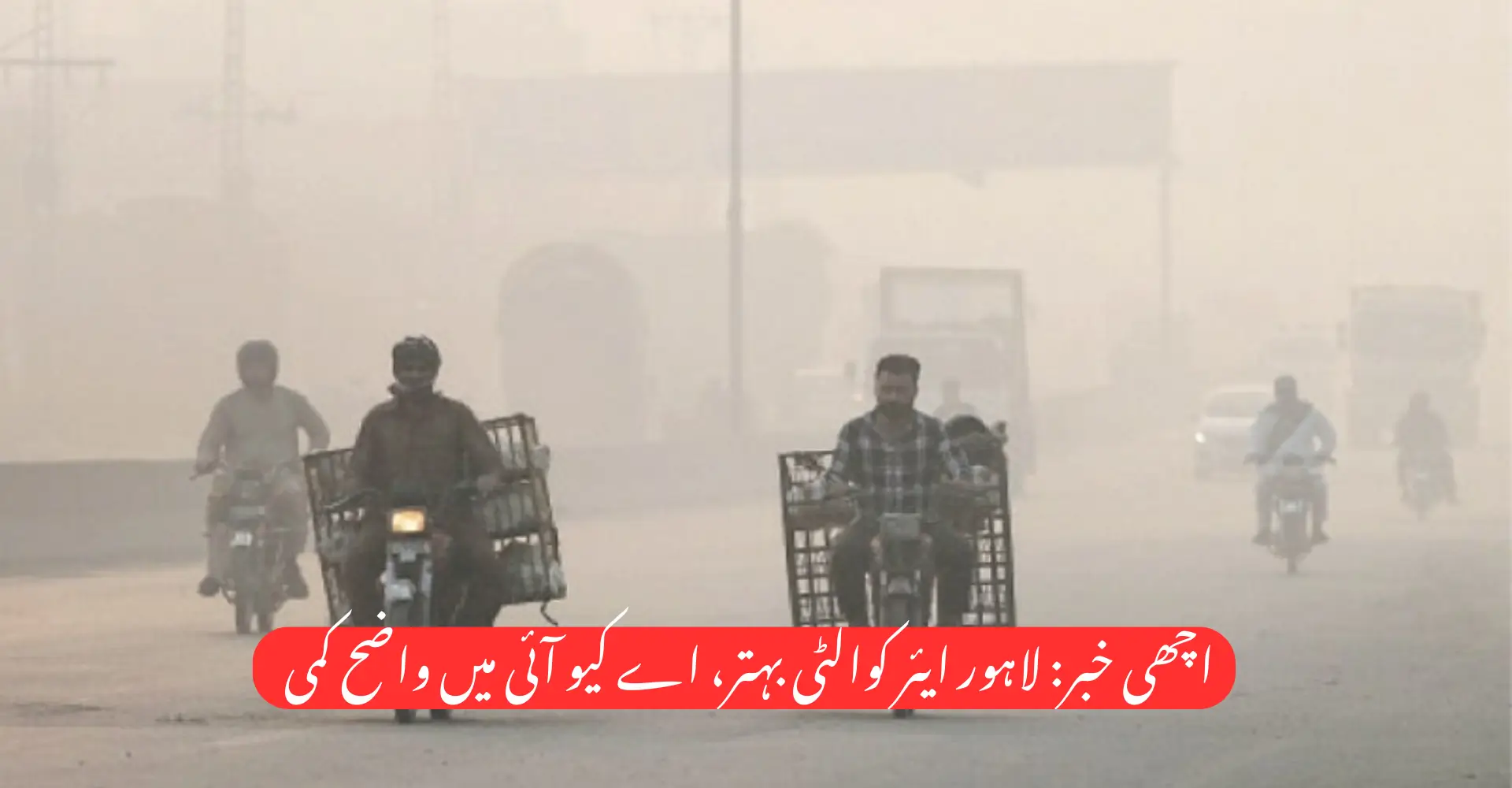
Lahore Air Quality Improves as AQI Drops to 181 in 2026. Lahore’s air quality has shown a significant improvement as the Air Quality Index (AQI) dropped to 181, offering much-needed relief to residents. This positive change raises an important question: is Lahore finally winning the fight against smog in 2026? Let’s explore what caused this improvement and what lies ahead.

Lahore AQI Drops to 181: What Does It Mean?
The Air Quality Index (AQI) is a globally recognized system used to measure air pollution levels and their impact on human health. An AQI of 181 falls under the “Unhealthy” category, but it is still far better than the hazardous levels Lahore has experienced in previous mid-December seasons.
AQI Scale Explained
| AQI Range | Air Quality Level | Health Impact |
|---|---|---|
| 0–50 | Good | No risk |
| 51–100 | Moderate | Acceptable |
| 101–150 | Unhealthy for Sensitive Groups | Mild risk |
| 151–200 | Unhealthy | Health effects possible |
| 201–300 | Very Unhealthy | Health alert |
| 301+ | Hazardous | Emergency conditions |
Compared to AQI readings above 300 in past years, an AQI of 181 signals progress, though caution remains essential.
Why Lahore’s Air Quality Improved in 2026
Several environmental and administrative factors have contributed to this improvement.
1. Strong Winds Help Disperse Smog
According to official data, wind speeds ranged between 8 to 10 km/h, creating favorable conditions for smog dispersion. Wind movement plays a crucial role in reducing pollutant concentration, especially PM2.5 and PM10 particles.

2. Favorable Temperature Conditions
The temperature is expected to peak at 24°C, which supports better air circulation and prevents pollutant trapping near ground level a common issue during colder days.
Punjab Government’s Zero-Tolerance Anti-Smog Policy
The Punjab government’s aggressive anti-smog strategy is being widely credited for the improved AQI levels.
Key Measures Implemented
Industrial Emission Controls
- Continuous monitoring of factories
- Immediate shutdowns for violations
- Installation of emission control systems
Brick Kiln Regulations
- Transition to zig-zag technology
- Crackdown on illegal kilns
- Fuel quality enforcement
Vehicle Emission Checks
- Action against smoke-emitting vehicles
- Traffic checkpoints in pollution hotspots
- Promotion of public transport
24/7 Anti-Smog Squads: A Game Changer
Punjab Chief Minister has made anti-smog squads fully operational, ensuring round-the-clock inspections.
Areas Under Surveillance
- Industrial zones
- Construction sites
- High-traffic corridors
- Commercial hubs
These squads use real-time data monitoring, ensuring swift action against violators — a step experts say was missing in previous years.

Role of Public Cooperation in Improving Air Quality
Senior Provincial Minister Marriyum Aurangzeb emphasized that government action alone is not enough.
Guidelines for Citizens
- Wear protective masks outdoors
- Avoid unnecessary travel
- Reduce vehicle usage
- Follow construction safety rules
- Avoid burning waste
Public adherence to these guidelines significantly reduces urban air pollution and strengthens long-term environmental sustainability.
Health Impact of Improved Air Quality in Lahore
Even a moderate improvement in AQI can deliver noticeable health benefits, especially for vulnerable groups.
Who Benefits the Most?
- Children
- Elderly individuals
- Asthma patients
- People with cardiovascular diseases
Short-Term Health Benefits
- Reduced eye irritation
- Fewer respiratory complaints
- Improved outdoor activity tolerance
How Lahore’s AQI Compares to Previous Years
| Year | Average December AQI | Status |
|---|---|---|
| 2022 | 320+ | Hazardous |
| 2023 | 280 | Very Unhealthy |
| 2024 | 230 | Very Unhealthy |
| 2026 | 181 | Unhealthy (Improved) |
This downward trend suggests policy consistency and enforcement are finally producing results.

Is This Improvement Sustainable?
Environmental experts caution that temporary weather conditions should not be mistaken for permanent solutions.
What’s Still Needed
- Long-term urban planning
- Expansion of green belts
- Clean energy adoption
- Electric vehicle incentives
- Cross-provincial pollution coordination
Without these measures, AQI levels could spike again during unfavorable weather conditions.
Pakistan’s Broader Strategy: AI & Smart Monitoring
Pakistan is increasingly exploring AI-based air quality monitoring systems to predict smog trends and implement preventive actions.
Benefits of AI in Smog Control
- Early warnings
- Data-driven policy decisions
- Faster enforcement
- Improved public alerts
Experts believe technology-driven governance will define air quality management beyond 2026.

FAQs
What is Lahore’s current AQI in 2026?
Lahore’s AQI has recently dropped to 181, indicating an improvement compared to previous years.
Is AQI 181 safe for health?
AQI 181 is considered unhealthy, especially for sensitive individuals, but it is significantly better than hazardous levels.
What caused the improvement in Lahore’s air quality?
Strong winds, favorable temperatures, and strict government anti-smog measures contributed to the improvement.

Are anti-smog measures still active in Punjab?
Yes, the Punjab government is enforcing a zero-tolerance anti-smog policy with 24/7 monitoring.
Can Lahore achieve clean air permanently?
Sustainable improvement requires long-term planning, public cooperation, and clean energy adoption.
Conclusion
The drop in Lahore’s AQI to 181 in 2026 marks a positive turning point in the city’s ongoing battle against smog. While the air quality remains unhealthy, the improvement highlights the impact of strict enforcement, favorable weather, and growing public awareness. To maintain this momentum, continued government action and citizen cooperation are essential.