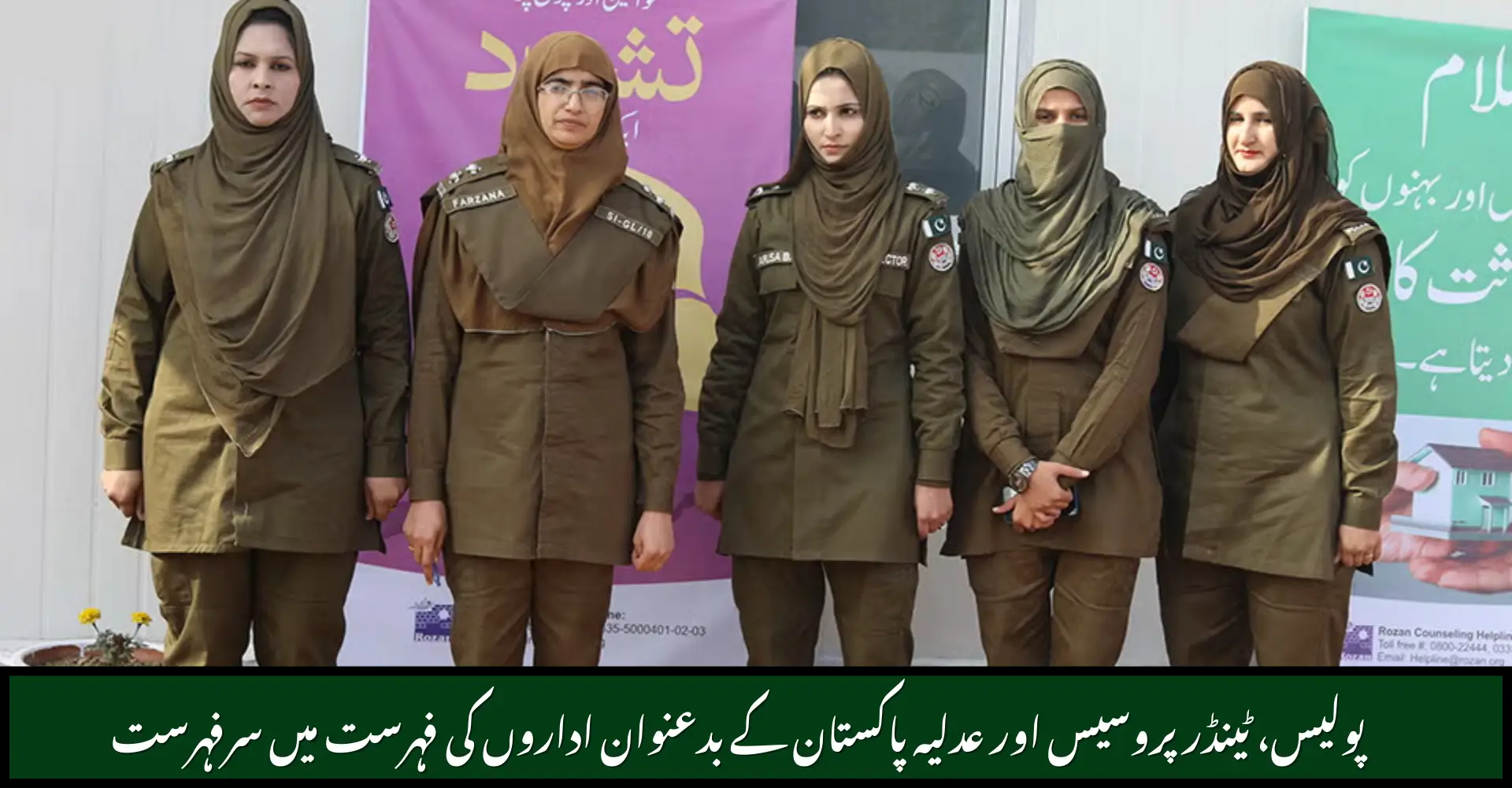
Police Procurement And Judiciary Top Corruption List in Pakistan Latest Survey 2026. Corruption remains a persistent challenge in Pakistan, affecting institutions, public trust, and governance. Transparency International Pakistan’s National Corruption Perception Survey (NCPS) 2026 reveals that the police, procurement processes, and judiciary are perceived as the most corrupt sectors nationwide. This article explores the survey’s findings, regional trends, bribery statistics, and public sentiment toward anti-corruption measures.

Top Corrupt Sectors in Pakistan 2026
1. Police: The Most Corrupt Institution
According to the NCPS 2025, 24% of respondents identified the police as the most corrupt sector, with Punjab showing the highest perception at 34%. Citizens cite issues such as abuse of power, bribery, and lack of accountability.
Key Points:
- Police corruption perception highest in Punjab (34%).
- Major complaints: bribery for services, political influence, and delays in justice.
- Public demand: more oversight and accountability for law enforcement agencies.
2. Procurement & Tender Processes
The second most corrupt sector is procurement and tender processes, identified by 16% of respondents. The survey highlights transparency issues in awarding government contracts and alleged favoritism toward private firms.
Table: Procurement Corruption Trends by Province
| Province | Percentage of Respondents Reporting Corruption |
|---|---|
| Punjab | 18% |
| Sindh | 15% |
| Khyber Pakhtunkhwa | 12% |
| Balochistan | 10% |
3. Judiciary: Perceived Corruption and Delays
The judiciary ranks third (14%), with delays in cases, lack of transparency, and perceived political influence cited as major issues. Citizens feel justice is often slow and inaccessible, contributing to low trust in courts.
Public Perception of Anti-Corruption Efforts
Despite high corruption levels, the survey also highlights public opinion on government performance:
- 77% of citizens expressed dissatisfaction with anti-corruption initiatives.
- Dissatisfaction was most pronounced in Balochistan (80%), followed by Punjab (78%), Khyber Pakhtunkhwa (75%), and Sindh (75%).
- 78% believe anti-corruption bodies (NAB & FIA) should themselves be held accountable due to concerns over transparency and political bias.
Causes of Corruption Identified by Citizens:
- Lack of accountability (15%)
- Lack of transparency & limited access to information (15%)
- Delays in resolving corruption cases (14%)
Economic Outlook and Corruption
The survey also reflects the economic situation alongside corruption perceptions:

- 40% partially and 18% fully agreed that government efforts, like the IMF agreement and FATF grey list exit, have stabilized the economy.
- 57% reported decreased purchasing power, while 43% reported an increase.
- Public sentiment indicates that corruption continues to negatively impact economic opportunities and social services.
Bribery in Public Services
One key insight: 66% of citizens did not pay a bribe for public services over the past 12 months. Regional differences remain significant:
- Sindh: 46% reported paying a bribe
- Punjab: 39%
- Balochistan: 31%
- Khyber Pakhtunkhwa: 20%
The findings suggest that while many citizens avoid bribery, certain provinces still face systemic issues.
Corruption in Healthcare
Healthcare corruption emerged as a major concern, with 67% of respondents highlighting its impact on public welfare. The main sources include:
- Hospitals: 38%
- Doctors: 23%
- Pharmaceutical companies: 21%
The survey shows that corruption in healthcare undermines access to essential services, eroding trust in public institutions.
Reporting Corruption & Whistleblower Support
Awareness and reporting remain low:
- 70% of respondents are unaware of official channels to report corruption.
- Among those aware, only 43% have ever reported an incident.
- 42% stated they would feel safer reporting if whistleblower protection laws were enforced.
Recommendations from Citizens:
- Strengthen whistleblower protection laws
- Improve public awareness campaigns
- Ensure transparent reporting mechanisms
Political Funding & NGOs
Public opinion favors regulation and transparency in political and charitable sectors:
- 83% support banning or regulating business funding to political parties.
- 55% favor banning use of party names and leaders’ images in public ads.
- 51% believe tax-exempt NGOs should not charge fees, and 53% want disclosure of donor information.
These measures aim to reduce financial corruption and enhance accountability in both political and nonprofit sectors.
Summary of Findings
Top Corruption Insights (NCPS 2025):
| Sector/Issue | Corruption Rate | Notes |
|---|---|---|
| Police | 24% | Highest in Punjab, misuse of authority |
| Procurement & Tenders | 16% | Lack of transparency, favoritism |
| Judiciary | 14% | Delays, political influence |
| Healthcare | 67% impact | Hospitals, doctors, pharma |
| Bribery | 34% overall | Regional disparities |
| Anti-Corruption Bodies | 78% accountability demand | NAB & FIA under scrutiny |
The survey underscores the urgent need for stronger oversight, accountability, and transparency across all sectors to restore public trust.
FAQs
Q1: Which sector is perceived as the most corrupt in Pakistan 2026?
A1: According to NCPS 2025, the police are considered the most corrupt, followed by procurement and judiciary.
Q2: How do citizens report corruption in Pakistan?
A2: Citizens can report through official channels like NAB or FIA, but 70% are unaware of these mechanisms.
Q3: What are the main causes of corruption in Pakistan?
A3: Lack of accountability, transparency, and delayed resolution of cases are major causes identified by citizens.
Q4: Is bribery still common in Pakistan’s public services?
A4: Yes, while 66% avoided paying bribes, regional disparities exist, with Sindh showing the highest rates.
Q5: How can anti-corruption efforts be improved?
A5: Citizens suggest enforcing whistleblower laws, increasing transparency, and holding anti-corruption agencies accountable.
Conclusion
The NCPS 2026 survey highlights the ongoing struggle against corruption in Pakistan, particularly in the police, procurement, and judiciary. While economic stabilization efforts show some positive results, citizens demand stronger accountability, transparency, and anti-corruption reforms. Implementing whistleblower protections, regulating political funding, and enhancing public awareness are critical steps toward meaningful change.