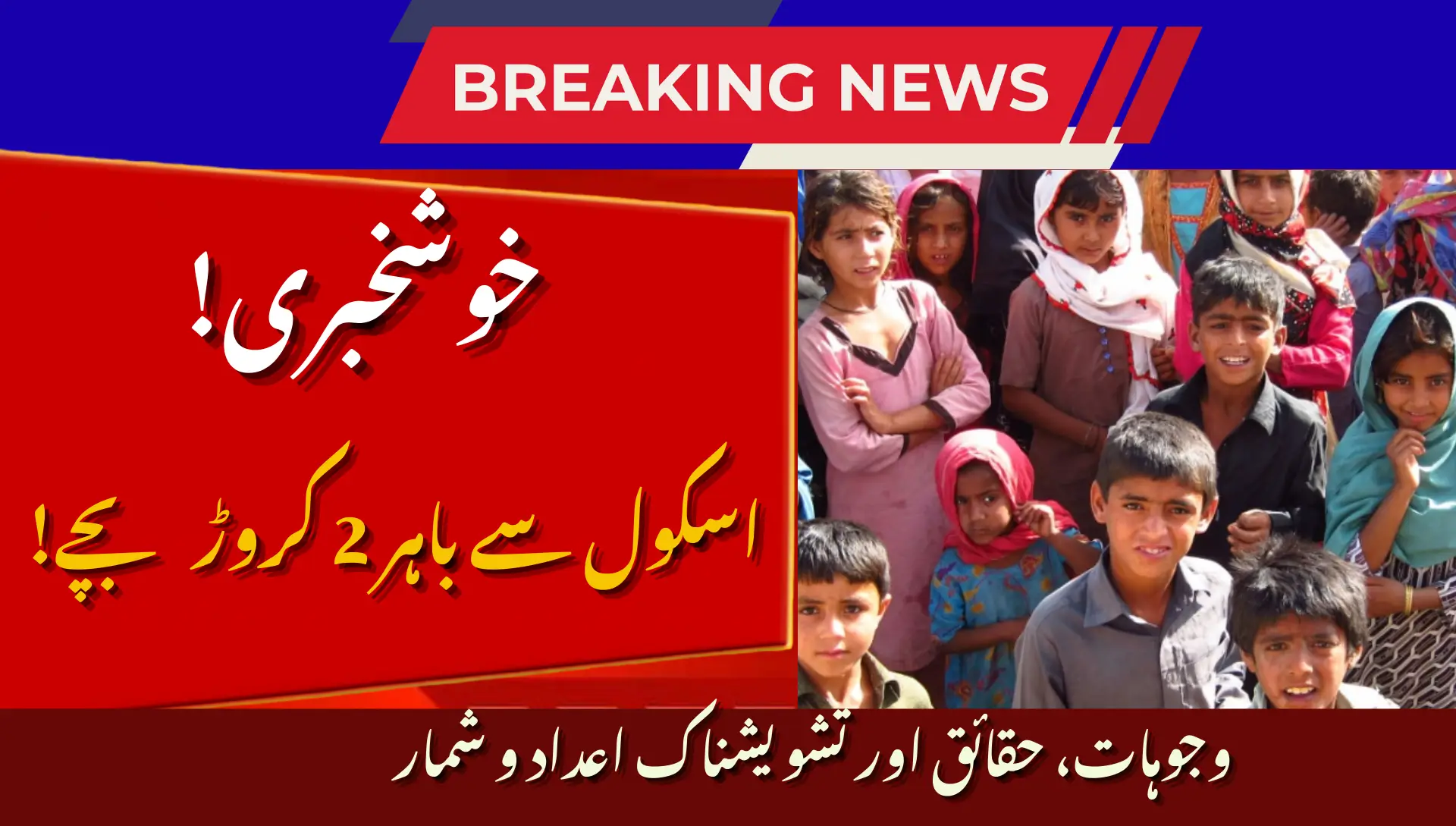
20 Million Children Still Out of School. Why are 20 million children still out of school in Pakistan despite years of education reforms?
Recent government data shows slight improvement, yet millions of children—especially girls and rural populations—remain excluded. This article breaks down the latest statistics, causes, and what Pakistan must do by 2026 to avoid a deeper education crisis.

Pakistan’s Out-of-School Children Crisis: Key Statistics
According to the Household Integrated Economic Survey (HIES 2024–25), Pakistan has made limited progress in reducing the number of out-of-school children.
Latest National Education Snapshot
| Indicator | Previous Data | Latest Data |
|---|---|---|
| Total Out-of-School Children | 25.3 million | ~20 million |
| Out-of-School Rate | 30% | 28% |
| Literacy Rate | 60% | 63% |
| Population Ever Attended School | 61% | 67% |
Despite the numerical decline, nearly 3 out of every 10 children in Pakistan are still not receiving formal education.
Provincial Breakdown: Where Education Gaps Persist
Punjab: Lowest Rate, No Improvement
Punjab continues to have the lowest out-of-school rate (21%), but progress has stalled. The province recorded no improvement compared to previous years, raising concerns over policy stagnation.
Sindh: Rural Girls Most Affected
- Out-of-school rate reduced from 42% to 39%
- Rural Sindh remains one of the worst-performing regions
- Girls face higher dropout rates due to cultural and financial barriers
Khyber Pakhtunkhwa: Slow but Steady Gains
KP showed moderate improvement, reducing the rate from 31% to 28%, yet access to secondary education remains limited in remote districts.

Balochistan: Biggest Improvement, Still Worst
- Reduced from 59% to 45%
- Despite progress, Balochistan has the highest education exclusion rate in Pakistan
Gender Disparity: Why Girls Are Left Behind
Gender inequality remains one of the biggest obstacles to universal education.
Out-of-School Rates by Gender
- 1 in 4 boys are out of school
- Nearly 1 in 3 girls are excluded
- Rural girls in Sindh and Balochistan face the highest barriers
Key Reasons Girls Drop Out
- Financial hardship
- Household responsibilities
- Early marriages
- Cultural restrictions on mobility
Without targeted interventions, Pakistan risks widening its gender education gap by 2026.
Why Children Leave School: Core Reasons Explained
Out-of-school children fall into two main categories:
1. Never Enrolled (20%)
- Poverty
- Lack of nearby schools
- Poor infrastructure
- Teacher shortages
2. Dropped Out (8%)
- High education costs
- Child labor
- Domestic responsibilities
- Weak learning outcomes
Boys are more likely to leave school for work, while girls drop out due to economic pressure and family constraints.

Food Insecurity: The Hidden Driver of Education Dropouts
The survey highlights a strong link between food insecurity and school exclusion.
Food Insecurity by Province
| Province | Food Insecurity Increase |
|---|---|
| Punjab | 14.4% → 22.6% |
| KP | 16.7% → 21.5% |
| Sindh | +10% (29%) |
| Balochistan | Over 30% |
Low-income households are five times more vulnerable, forcing children into labor instead of classrooms.
Digital Divide: Education in the Age of Technology
Despite the vision of Digital Pakistan, access remains uneven.
Connectivity Snapshot
- Mobile phone usage declined from 91% to 83%
- Only 12% of people have bank accounts
- Just 9% use mobile money services
- Computer ownership dropped to 7%
While household internet access improved, digital skills remain basic, especially among women and rural populations.

Health & Education: A Positive but Insufficient Link
Improved health outcomes indirectly support education, yet gains remain limited.
Improved Indicators
- Infant mortality reduced from 60 to 47
- Overall mortality declined
- Access to clean water rose from 74% to 79%
However, education outcomes have not matched these improvements, highlighting policy imbalance.
Why This Matters: Economic Growth at Risk
Planning Minister Ahsan Iqbal warned that Pakistan cannot achieve sustainable economic growth with low literacy levels.
Long-Term Risks
- Reduced workforce productivity
- Higher unemployment
- Increased poverty cycles
- Weak human capital development
Education is not just a social issue—it is an economic survival strategy.

What Pakistan Must Do by 2026
Actionable Solutions
- Increase education budget allocation
- Target rural girls with conditional cash transfers
- Expand school meal programs
- Improve teacher training
- Integrate digital literacy into curricula
Without aggressive reforms, Pakistan risks losing another generation.
FAQs
Why are 20 million children out of school in Pakistan?
Poverty, food insecurity, gender inequality, child labor, and lack of access to schools are the main reasons.
Which province has the highest out-of-school children rate?
Balochistan, despite recent improvements, still has the highest exclusion rate.
How does food insecurity affect education?
Families struggling with food costs often withdraw children from school to work or reduce household expenses.

Is Pakistan improving its literacy rate?
Yes, literacy has increased slightly, but progress is too slow to meet future economic demands.
What can reduce school dropouts by 2026?
Targeted funding, girls’ education programs, digital inclusion, and poverty alleviation initiatives.
Conclusion
Although Pakistan has reduced the number of out-of-school children to 20 million, the pace is far from adequate.
Without urgent reforms, poverty, gender gaps, and food insecurity will continue to block educational access.